Modern society totally devalues anything considered even slightly old. I used to notice it as a real lack of intergenerational knowledge transfer, but it's gotten so bad that it seems like more and more people react with "how do you know so much?" and "why would you do that?" over very basic knowledge that isn't even that old. For all the reading the average person claims to do, they sure don't seem to know very much outside of a 10-year window unless they happen to have studied history in college or whatever.
But I don't necessarily blame said people, at least in the proximal sense. The technological industrial complex continuously refines its understanding of the desire for novelty that's always been there and seeks to exploit it; and they've gotten unreasonably good at that. It doesn't matter if your intellectual property is just as relevant as ever, perhaps more so, if there's some hip new alternative. Udemy and of course social media sites know this, and I think there's a feedback loop that goes beyond mere exploitation of the human psyche, but in the actual training of the human psyche to have blindness towards the past.
The only answer right now, besides hosting your own courses (with hookers and blackjack), might be to periodically recreate your online presence from scratch in order to exploit the algorithm back. If your courses on Udemy aren't seeing the traffic they deserve, close your account, and create a new one... assuming that's feasible and they don't check too hard. With the current state of AI, this may just be a cat and mouse game that can't be sustained.
Plus a lot of experience, creativity, and artistry to solve other challenges (e.g. shaders, shadows) and wire everything together into this pretty performant piece of art.
The studio also has a case study here of another project they made, with other hints about their tooling and process:
Just for anyone like me who played this and spent the whole time thinking, "this is beautiful, who are you and how did you make this?" The author names are only revealed in the credits at the end:
* Thinking they held all the cards, RailsConf uninvited DHH from the conference in 2022. They would never admit this, but the reasons were extremely petty, and all due to Ruby Central's (organizer of RailsConf and RubyConf) hyperpartisan nature. For example, DHH dared to suggest the audacious policy of "no politics at work" during a year where extreme politicization ran rampant. This may sound like an exaggeration, and I wish it were, but it's not.
* In 2023, the first Rails World was held in Amsterdam, organized by a new entity called the Rails Foundation (created by DHH and a number of other pioneers). It was a vastly better conference. By this time, RailsConf had all but eliminated their technical track in favor of "soft" subject matter. Amenities like coffee were only available during a tight ~30 minute window in the morning. The food was awful. And this despite tickets not being cheap. At Rails World by contrast, the talks were world class, the company/community excellent, and the snacks/food/amenities plentiful and top tier.
* Rails World was a smash success while RailsConf 2023 was unambiguously, not. One sold out in <10 minutes, the other was sparsely attended at best. Sponsors started moving.
* The same pattern repeated in 2024, except worse. While Rails World 2023 has been a pilot even with relatively few attendees, far more tickets were allowed for 2024, and even with the additional capacity, it still sold out in minutes. Not only was DHH keynoting, but all talks and the event itself were of the highest possible quality bar.
Meanwhile, Ruby Central was making some very poor financial decisions. For example, they reportedly gave up a ~half million dollar deposit on a Texas venue for 2023 so they could move the conference to San Diego. Once again, for political reasons (in their world view, Texas = evil, despite some the organizers themselves choosing to live there).
With the trend lines moving in all the wrong directions, there was no way that RailsConf was going to survive much longer anyway, so they decided to call it quits for 2025.
Obviously, RubyCentral had made their 2022 decision to uninvite DHH banking on him not deciding to start his own conference, but he did, and it turned out that he held all the cards, not them. There was a lot of unnecessary strife involved in the whole process, but in the end, the Rails community has landed in a much better place.
The 'brain-inspired' community has always been doing this, since Carver Mead introduced the term 'neuromorphic' in the late 1980s. Reselling banalities as a new great insight. My favourite is "Neuromorphic computing breakthrough could enable blockchain on Mars" [1]. What else can they do? After all, that community has now multiple decades of failure under it's belt. Not a single success. Failure to make progress in AI and failure to say anything of interest about the brain. To paraphrase a US president: In this world nothing can be said to be certain, except death, taxes and neuromphicists exaggerating. (Aside: I was told by someone who applied to YC with a 'neuromorphic' startup that YC said, they don't fund 'neuromorphic'. I am not sure about details ...). The whole 'brain talk' malarkey goes back way longer.
In particular psychology and related subjects,
since their origins as a specialty in the 19th century, have heavily used brain-inspired metaphors that were intended to mislead. Already in the 19th century that was criticised. See [3] for an interesting discussion.
There is something interesting in this post, namely that it's based on non-Nvidia GPUs, in this case MetaX [2]. I don't know how competitive MetaX are today, but I would not bet against China in the longer term.
Adding to what everyone else has said, Japan is known to be a threshold nuclear state (from a weapons perspective). They explicitly stay around just weeks away from being able to perform a nuclear weapons test, and they are commonly referred to being "a screwdriver's turn" away from having a nuclear weapon.
They have massive government investment in not only maintaining that status, but also doing so on a completely domestic supply chain as much as possible.
Therefore they have the same need for supercomputers that the US national labs do (perhaps more so, since they're even more reliant on simulation), and heavily prefer locally sourced pieces of that critical infrastructure.
I wouldn't be surprised if an incredibly large part of the local push for Rapidus is to pull them off of TSMC and the supply chain risk for their nuclear program in case the whole China/Taiwan thing comes to a head.
> Consider email. I still need to have access to email, and I want to have notifications enabled so I don’t miss something truly important. But 90% of the emails I get aren’t important.
I was at a talk at FOSDEM this year and they were talking about how most emails now (over 90%) are transactional in nature and not personal. Things like password resets, offers, 2fa, shipping confirmations.
This was a lightbulb moment for me - for years I'd been trying to fight email by using sieve to filter away the most annoying senders and subjects but they're right - almost all email doesn't deserve your immediate attention.
I switched my method to whitelist. I created a folder called Transactional and everything goes in there. Then I started whitelisting certain email addresses to let them get to my inbox. I have around 20, and for the first time in years I'm at a point where I could have notifications for my inbox. I still don't, but they'd be useful now
I lived in China for a while and there were several waves of VPN blocks. Also very few VPN services even try to actively support VPN-blocking nations anymore. Any commercial offering will be blocked eventually.
What I settled on for decent reliability and speeds was a free-tier EC2 hosted in an international region. I then setup a SOCKS5 server and connected my devices to it. You mentioned Cloudflare so whatever their VM service is might also work.
It's very low profile as it's just your traffic and the state can't easily differentiate your host from the millions of others in that cloud region.
LPT for surviving the unfree internet: GitHub won't be blocked and you'll find all the resources and downloads you need for this method and others posted by Chinese engineers.
Edit: If you're worried about being too identifiable because of your static IP, well it's just a computer, you can use a VPN on there too if you want to!
If you need to bypass censorship, you'll need a tool specifically designed for anti-censorship, rather than any one repurposed for that.
Since China has the most advanced network censorship, the Chinese have also invented the most advanced anti-censorship tools.
The first generation is shadowsocks. It basically encrypts the traffic from the beginning without any handshakes, so DPI cannot find out its nature. This is very simple and fast and should suffice in most places.
The second generation is the Trojan protocol. The lack of a handshake in shadowsocks is also a distinguishing feature that may alert the censor and the censor can decide to block shadowsocks traffic based on suspicions alone. Trojan instead tries to blend in the vast amount of HTTPS traffic over the Internet by pretending to be a normal Web server protected by HTTPS.
After Trojan, a plethora of protocol based on TLS camouflaging have been invented.
1. Add padding to avoid the TLS-in-TLS traffic characteristics in the original Trojan protocol. Protocols: XTLS-VLESS-VISION.
2. Use QUIC instead of TCP+TLS for better performance (very visible if your latency to your tunnel server is high). Protocols: Hysteria2 and TUIC.
3. Multiplex multiple proxy sessions in one TCP connection. Protocols: h2mux, smux, yamux.
4. Steal other websites' certificates. Protocols: ShadowTLS, ShadowQUIC, XTLS-REALITY.
Oh, and there is masking UDP traffic as ICMP traffic or TCP traffic to bypass ISP's QoS if you are proxying traffic through QUIC. Example: phantun.
The widespread belief that it is rare, is an invitation to fraudsters. Who have therefore wound up in such positions as president of Stanford. It is hard to catch them because people's a priori belief that there isn't much fraud makes it hard to accept that any particular researcher could be a fraudster. Which greatly reduces the risk of being a fraudster.
Ah good question and sorry that wasn't clear—I use that word a lot. By "activation" I mean arousal of the nervous system, particularly the sympathetic nervous system, which regulates fight-or-flight responses, and the limbic system of the brain which assesses threats and seizes control when it feels that survival is threatened.
What happens in flamewars is that when people encounter material they strongly disagree with, these systems get activated and rapidly produce aggressive and defensive responses that have to do with self-protection, and nothing to do with thoughtful consideration of the material, things one might learn, points where one might be wrong, curiosity, playful interaction, and so on. When survival is at stake there is no time or space for the latter sorts of reactions. But it's the latter that we want on HN—they're what the site is for.
Of course we all know cognitively that our survival is not really at stake when someone disagrees with us on the internet—at least our frontal cortices know that—but our limbic systems and autonomic nervous systems definitely do not know that. They experience it as a threat and from then on it's kill-or-be-killed. The fact that survival is not really at stake has no effect; what matters is the feeling that it is so.
This is what underlies commenters being so angry, snarky, sarcastic, aggressive and so on, on the internet. It's also what underlies our inability to hear each other or respect each other.
I sometimes describe this is as 'reflexive' vs. 'reflective' responses (https://hn.algolia.com/?dateRange=all&page=0&prefix=true&sor...). By 'reflexive' I mean when the rapid-response system I just described takes over and reacts from "cache", so to speak, to quickly counter
a threat. By 'reflective' I mean the slower processes that happen when one is in a relaxed state and available for curiosity and play. In the jargon I'm using, 'activated' means being in 'reflexive' mode, and 'interested' or 'curious' means being in 'reflective' mode.
This has all kinds of interesting aspects. Here's one: you can't be in both of these states at the same time. It's literally one or the other. Think of the implications that has for a community like HN, where basically everything we want comes out of one of those two states and everything we don't want comes out of the other.
Someone is going to object that political developments can and do present real survival threats. That of course is true, and maybe to the extent that it is true, people have no choice but to function in kill-or-be-killed mode. But we feel this way and behave this way to a greater extent than we need to, and that's one factor preventing conflicts from being solved. That's a vicious circle which it's in all our interests to explore our way out of. We can't kill our way out of it.
In case it's not obvious, I'm using the word 'kill' metaphorically. What I mean by 'kill' is what we do when we try to eliminate threats (and the feeling of threat) by annihilating the other. That shows up as real killing in extreme situations like war, but the same (let's call it) psycho-physiological state shows up in other environments too, including trivial ones like internet forums. Here it shows up as people trying to annihilate the other by maximizing the aggressive potency of their language.
How do we end up getting so activated when we don't need to? and what can we do to become less activated in this way? I believe that if you tug on those threads and keep tugging, you arrive at the most important problem in the world. That's one main reason why I've kept working on HN for so long. Internet comments are trivial, but this environment is a laboratory for learning about this stuff—not just by observing others, but mainly by working with what they activate in oneself. In that sense it's a driver for growth and learning. This learning isn't primarily conceptual—it's more somatic.
p.s. Lots of people on HN know far more about the physiology here than I do. What I'm saying comes from my explorations of the therapy world, e.g. somatically-oriented trauma therapies and even-more-out-there stuff. That culture veers into metaphor more often than genuine specialists would be comfortable with. If I've done that in this comment I would certainly be interested in correction!
1. Apparently simple enough to implement to get the basics right (not that I could do it)
2. But there is plenty of room for accidental edge cases in the implementation
3. Many then implement it with or without edge cases
4. But it’s not enough because a lot of the people who use it are programmers so they naturally want to extend it to do just a little more
5. Now the standardization effort (Commonmark) has to take all of those edge cases into account plus have to figure out how to deal with extensions (especially for popular ones)
6. Then you get a heroically (in terms of effort and grit) wordy standard
All for the initial idea which is so simple that it seems redundant: look as good plain as rendered. (Then what’s the point of rendering it, and in turn what’s the point of a formal syntax instead of the (still existing) ad hoc email and whatnot conventions?)
Right now it’s fantastic for chat applications (here you definitely want rendering and not the visible markup). It’s been pretty good for things like forum comments as well. With the exception of block quotes which are a pain to fiddle with (the only prefix syntax if you don’t include the indentation-for-code since that is de facto optional now that so many applications support code fences… all because that’s how email does it).
Go into this dir, and create your venvs and install the packages
    cd venvs
    python -m venv harlequin
    ~/venvs/harlequin/bin/pip install harlequin
Now this binary is available at
$ ~/venvs/harlequin/bin/harlequin
Repeat for the rest
    cd ~/venvs
    python -m venv pgcli
    ~/venvs/pgcli/bin/pip install pgcli

    cd ~/venvs
    python -m venv httpx
    ~/venvs/pgcli/bin/pip install httpx
Wash, rinse, repeat. Now you have all these binaries available and can alias them
    alias harlequin="~/venvs/harlequin/bin/harlequin"
    alias pgcli="~/venvs/pgcli/bin/pgcli"
    alias httpx="~/venvs/httpx/bin/httpx"
This is a pain in the ass though and usually simple CLI tools like this do not collide with each other. So that is why I say install globally, or install into your "global junk drawer" virtualenv.
Meanwhile, for actual projects that you are developing on, those would have their own isolated venv.
I have a junk drawer venv where I install tools like this. If something goes wrong, it is as simple as rm -rf the venv and make a new one. And then I have isolated ones for each of the actual systems I maintain. Again, I use pyenv for this to make it a little easier to manage in conjunction with their specific python versions such that I do not ever interact with my distribution's Python. This is cross platform so it works across mac, linux etc. Very easy workflow, isolated, safe, can get blown away and recreated in a heartbeat.
It can also be made to work for highly-responsive but relatively small data sets: At Justin.tv, the scaling issues we hit with the first-generation video system were net splits and an increasing percentage of processor time being devoted to synchronization. The replacement system used a single PostgreSQL server (with a hot backup) to hold the real-time status of the entire system: Where every channel was being put into the system, the entire replication graph for every channel, active BGP routes, and the current load of every server and network link.
Whenever a viewer showed up to the website, we’d do a relatively complicated query against this database to figure out which server to direct them to for the channel they wanted to watch. The net result was a system that showed video sooner, with less latency, and more cheaply than any of our competitors were able to achieve. I don’t know what their setup looks like these days, but this basic setup took them from before the Twitch.tv rebrand all the way to their Amazon acquisition.
There was a lot of tuning that we had to do to make this work (like running off of a ramdisk, and having a pool of read-only clones), and it certainly had its hair-tearing-out moments, but in retrospect it was absolutely the right choice. We kept expecting it to fall over, but the plan to shard the database onto multiple servers collected dust for years because there was always a way to get the performance gains we needed through basic tuning.
We need laws to require special labelling with the price per net pound or price per net kiloggram clearly shown, and the previous price. Something like:
I wish there was legislation in place that sets legal standard sizes; for one, it would allow for more uniform packaging, allowing reuse between brands and reducing trash. It would be more predictable box / pallet sizes, reducing transport costs. And it would give consumers more security, even with the mandatory price per liter / kilo notices which are often hard to read.
One example of shrinkflation / cost fuckery here is cheese. We buy a kilo of it every time, but they've changed it so you get e.g. 920 grams. Looks the same size, but it's slightly different, thus hard to make comparisons. Still up 30% since before the Ukraine thing though.
I block ads because they're psychological warfare that corporations wage against me. I don't care how unobtrusive the ads are. I don't care if the ads don't track me. I grew up changing the channel on TV when ads came on, and ripping adverts out of magazines before sitting down to read them. I vote for billboard bans whenever I can. I have zero tolerance for ads of any sort.
Advertisers have no morals, they're completely depraved. They'll eagerly exploit a teenager's self-conscious body issues to sell useless beauty products. They sell sugar water to fat people and at every turn promote the rampant consumerist culture that is destroying our planet. They're lower than pond scum and I never want to see a single ad from them ever.
1. Removing senescent cells extends life by 30-40% with huge quality of life improvements in the last 25% of the life (relative to control), in mice. This isn't an elimination of all aging, but quite a valuable thing regardless. Eventually, other causes of aging would kick in and still cause death, without a single senescent cell in your body (e.g. DNA methylation).
2. I believe all governments should create Warpspeed for this approach. At the depths of covid lockdowns, GDP was down 20%. Imagine the massive GDP creation from making every 65+ year old feel 40 again. They'd work, consume, and generally flourish. Even if it's only 10 more years of quality life, this is the greatest good that could be done for humanity. To avoid another 10 years of my parents death is something I'd do a lot for. Economically and ethically, we should prioritize this research above most else.
3. This approach is scientifically sound. Certain aspects of aging cures are approaching engineering levels of work rather than pure science. We simply know that many diseases are caused or amplified by senescent cells. And we have ample evidence that elimination of these cells reverses diseases in complex mammals, as long as you don't remove too many, too quickly. The rest, is the engineering problem of how to remove the right cells at the right cadence.
4. This is the kind of thing biohackers should hack on. Find an aging part of your skin, and attempt to convince your body to kill the senescent cells. If you succeed, you will have benefited humanity, become beautiful, become wealthy, and be remembered forever (is there any other fundamental need humans have, not covered)?
I think a lot of 90s and early 2000's idealist movements have been disbanded or migrated to smaller groups that are equally unable to change things. I remember when copyright reform was the biggest thing with Lessig and that's entirely dead. Douglass Rushkoff went from famous intellectual to nobody. Cory Doctorow also entirely ignored now. I think a lot of these people realized that if they can't fix politics then they can't enact their agenda. If your nation state and electorate works against your ideals then you'll eventually fail. You have to fix the electorate first and that took a big step backwards by watching social media turn into conspiracy right-wing media and radicalize tens of millions of americans towards sociopathic, pro-death, anti-prosperity, pro-faith, and anti-intellectual views. None of which lead to utopia, but to further corruption and victimization.
I also think these people were relatively young and now have families and mortgages and retirement accounts to pay for and the wind was taken out of their ideological sails when they realized the system will punish them if they don't assimilate into the status quo. Many cypherpunks just write code for big companies and writers have moved onto chasing literary fads to make rent. Its either that or be thrown them into poverty. The system you want to reform has built-in anti-reform mechanisms and your needed paycheck, especially tied to your health insurance, is one of those mechanisms. This is also why so many famous reformers were either old-money types or had ideologically aligned patrons to fund them. These grassroots groups don't often have
that so they fail.
Successful peaceful reform movements are actually shadow-funded and shadow-politicked for by the elites. Elites against other elites and using people like this for their own ends. Elites won't sign on to anything that potentially hurts their wealth or power, which all these idealistic reform movements would do. Short of a popular uprising and violent revolution, we can expect the same lack of progress on utopian thinking in the future because utopia is attainable, its just the resources that's needed for it are controlled by people who don't want to give them up.
makes me sad to hear that :( I will say, as a reverse engineer, that javascript minifiers like closure compiler will optimize almost all obfuscation out, and the rest you can usually translate to a form which it can understand and then it will do the rest.
The effect of obfuscation is not what you expect. It seems like it moves the whole difficulty up, but it only moves up the floor. By doing so it tends to remove all the signals that would warn non-experts of security issues. Remove the obfuscation and then you have all the catastrophic security issues that have accumulated in there like treasures in an egyptian king's tomb https://zemnmez.medium.com/how-to-hack-the-uk-tax-system-i-g...
- 20x20x4 MERV12 filter. The 4-inch pleating is key here, to reduce the air resistance on the box fan.
- 1 inch dust pre-filter. This is course, low air resistance, and is for increasing the life of the more expensive MERV12/HEPA filter (so it doesn't get clogged with easy to filter dust).
- Both filters are on the intake side of the box fan. This means you don't need a bungee cord because the intake has negative pressure, the filters just "stick". It also means you keep your box fan flowing with only cleaned air.
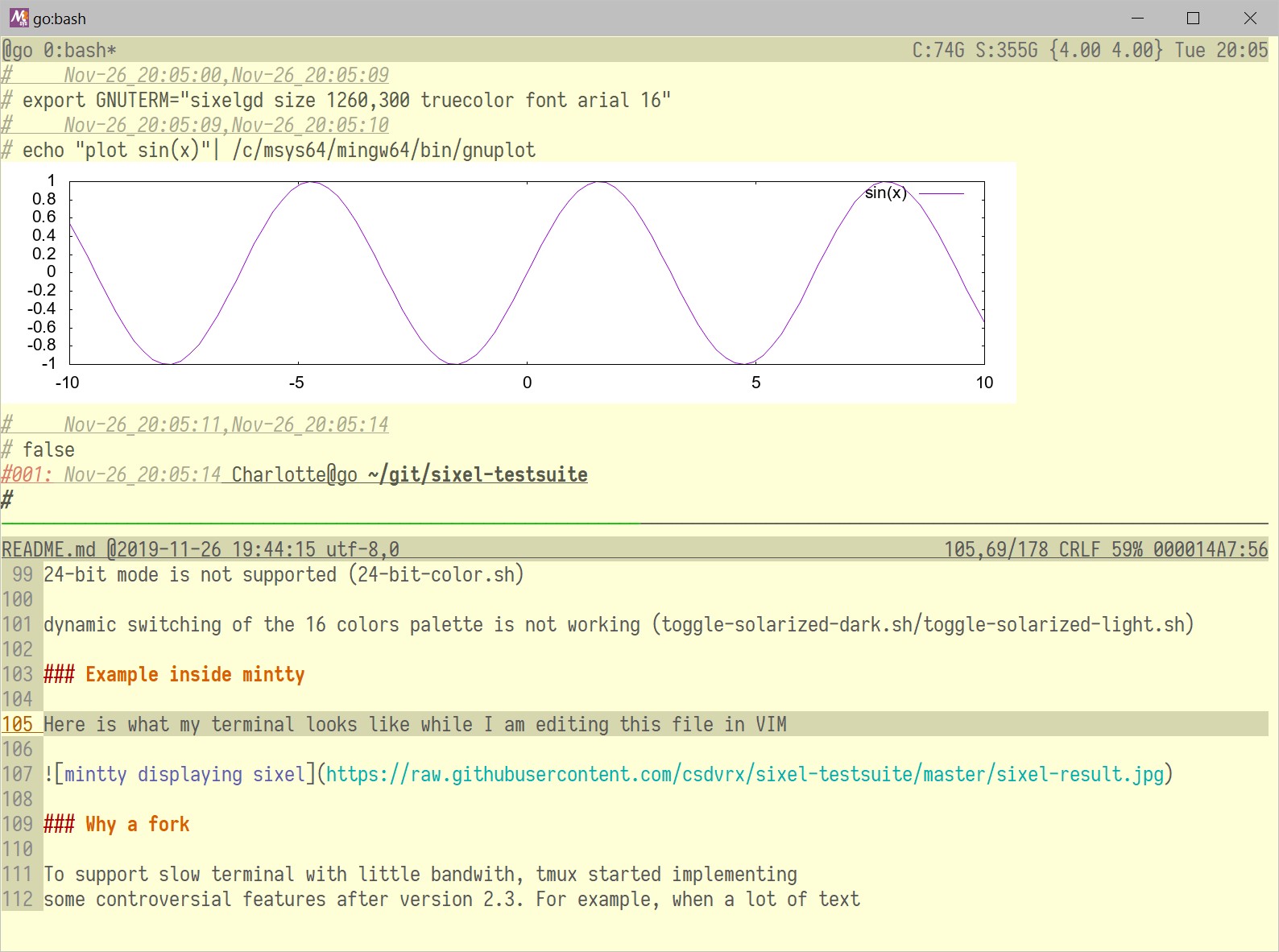
Yes, I use a low contrast theme, light grey on yellow.
My vim is Solarized based so I can invert colors at night and get more contrast by collapsing the RGB values into just red using NegativeScreen.
My bash is more custom: to be even lower contrast, I don't use colors except for when commands return with an error code. Instead, I use font attributes a lot (bold, italics, faint, etc) and I timestamp my commands so when I check my records I can easily find which parts took me the longest to think and do. The command I am typing has the current directory in bold to quickly remind me as I usually have several terminals opened.
Previously, I used Nix on Mac (as this blog post suggests) but I had enough “gotchas” with Nix on Mac that I decided to go full NixOS.
For those who ask why a VM or why I keep Mac around at all: I like macOS for everything else besides dev work. I use iMessages heavily, I like the Mac App ecosystem such as calendars, mail clients, etc. This gives me the best of both worlds.
I usually run this on an iMac Pro but also have a MacBook Pro. It runs great on either. It’s also really nice with Nix to update one machine and the other is just one command away from being equivalent.
I recognize this is a “weird” setup but wanted to point it out since it seems relevant to this post.
I always laugh when people end up with designs like this. They could have just used SMTP! It's designed to reliably deliver messages to distributed queues using a loosely-coupled interface while still being extensible. It scales to massive amounts of traffic. It's highly failure-resistant and will retry operations in various scenarios. And it's bi-directional. But it's not "cool" technology or "web-based" so developers won't consider it.
Watch me get downvoted like crazy by all Nodejs developers. Even though they could accomplish exactly what they want with much less code and far less complex systems to maintain.
> At a previous company, there was an “infamous” commit in our main repository. The commit was about 10 years old, and it replaced every tab with 4 spaces.
If have commits like this, add the ids to a file `ignorerevs`, and then tell git about it:
This is what I loved about working at Netflix. We didn't have performance reviews. It was assumed that your performance was good to excellent, otherwise you wouldn't be working there anymore. You had a constant feedback loop with your manager on performance, but nothing was ever formal.
Raises were completely divorced from any performance assessment. You were paid whatever they thought the max was for your skillset, based on a bunch of data they had on what people at other companies got paid for similar work.
What we did have was 360 reviews once a year. It was basically a small survey you could fill out about anyone in the company, which they and their manager would see. You could evaluate your boss, your VP, or people who worked for you, or anyone else you worked with anywhere in the company. It was expected that managers do a 360 review for all of their reports, but beyond that you could do as few or as many as you wanted to. It was basically a start/stop/continue kind of thing.
It was such a refreshing change from the stack ranking at eBay, which forced good people to get shitty reviews just so they could "fit the bell curve". And as you said, it incentivized you to not praise coworkers and some people even actively sabotaged their coworkers to get a better rank.
Have worked in the identity space for a long time. Authentication isn't a hard problem, but identity is. It will be decentralized because if it is not fragmented, it is literally just oppression. Trusting authentication is not trusting identity, and the origin of identity is the Ur-problem because it comes down to questions of recourse, collateral, risk, authority, and legitimacy - which are all political economy questions and not technical ones.
The technology can change the economics of identity, but identity itself reduces to how you organize to provide recourse to people within your scope. Sure, we can use escrow systems and smart contracts, but these still require a means to organize and provide adjudication.
All the use cases for digital identity are about enforcement and liability, and there are almost none that anyone would volunteer for. In this sense, identity is necessarily imposed, so all products in the space are necessarily aimed at a customer who is imposing identity on a group. It's why I tell identity companies who ask to find some other problem to solve because holding out for some government to adopt your product as their source of sovereignty is a waste of time. There is one other use case for identity, and yes, it is decentralized and bottom-up, because it is about dividing into secure, self-sovereign affinity groups, and the reasons for doing that are on a very short list of uses. Super fun, but basically a weapon.
> "The real power of digital communication is that it is searchable"
The Library of Congress has ~38 million books in it. Imagine you could search it, it's easy to say that would make it more useful. And it probably would for some people - but a human has very little processing power and slow reading speed, if you got 38 million books reduced to 1,000 context-free paragraphs, that's still too many to read through.
This leaves "search" as a tool for limited situations such as: You remember roughly who put the content there and when and close-enough exactly what it said. Often in this situation that's still not enough to find it. Or, you want something popular like "iTunes Store Login" or "$Restaurant opening times". Or you are a researcher/archeologist.
Outside those kinds of usecases, "it's searchable" is more of a tragedy of the commons style problem - people who are best placed to do it (those making decisions) don't want to do it, and offload the problem to everyone else saying "it's searchable". This leaves decisions, documentation, and history scattered over an ever-increasing wasteland and intermingled with countless book-equivalent-volumes of chat, jokes, memes, flamewars, "donuts in the breakroom" trivia, outdated status updates, and all sorts.
Slogging through 1,000 paragraphs from the Library of Congress search results is still possible. Increasingly, every move is dogged by the weight of "search the 10,000 GitHub issues and read all the screens and screens of backlog" and "search the mailing list archives", the Slack archives, the IRC archives, the email threads, the forum threads, skim-reading junk and junk and junk, only to have to do it again 5 minutes later when your boss says "what was the status of X project?" and 20 minutes later when your coworker says "any reason X was changed?" and 10 minutes later when you want to know if X library should be behaving this way or not.
"Do nothing and let the search be our panacea" has always won over "big-organize up front" but it should be clear to everyone by now that Google search results get worse year on year. Nature lets things rot, unless you put maintenance effort in to keep them. We burn some money and a LOT of people's time keeping junk by default, on the "it might come in useful oneday" principle that leads to hoarder houses.
We act as if data can't cause disease and can't attract cockroaches, but ignore the fact that it piles up, clutters things up, gets in the way, it's the arterial plaque, the drainpipe sludge, the rust, of computer systems.
The power of digital communication is space travel - it's possible for people far away to be involved, and time travel - people who weren't there see what happened. "Searchable" is the Siren's call, that's not its power, that's its road to Hell paved with good intentions.


But I don't necessarily blame said people, at least in the proximal sense. The technological industrial complex continuously refines its understanding of the desire for novelty that's always been there and seeks to exploit it; and they've gotten unreasonably good at that. It doesn't matter if your intellectual property is just as relevant as ever, perhaps more so, if there's some hip new alternative. Udemy and of course social media sites know this, and I think there's a feedback loop that goes beyond mere exploitation of the human psyche, but in the actual training of the human psyche to have blindness towards the past.
The only answer right now, besides hosting your own courses (with hookers and blackjack), might be to periodically recreate your online presence from scratch in order to exploit the algorithm back. If your courses on Udemy aren't seeing the traffic they deserve, close your account, and create a new one... assuming that's feasible and they don't check too hard. With the current state of AI, this may just be a cat and mouse game that can't be sustained.