My experience supports nearly all of this. In 2022 I decided to keep my 2019 F-150 gasser instead of getting a Lightning because the Lightning was ridiculously expensive, even though Covid kept the value of my truck close to what I paid for it. I also didn't want all the Lightning's luxury features that tend to fail and highly depreciate over time. We do >12hr drives for work & family through remote BC and I was still willing to try the EV for such trips but didn't see the payback. In hindsight it was a good choice given the actual range experienced by Lightning owners.
Our favorite is still PDF-XChange [1] which has been our daily driver for years. Only dislike is the difficulty in opening a document in a separate application window. It's either everything in one window or everything in its own window.
You're right. It's clear I should have had an LLM write my comment rather than do it myself before a cup of coffee. I've already spent an order of magnitude more energy thinking about this article compared to an LLM.
Also, since I live a first-world life style which consumes multiple KW of power, I've probably consumed multiple orders of magnitude energy more than an LLM on this topic.
As another comment mentioned, papers get revised during review, usually in response to reviewer comments. Also, some journals (not sure about Nature) do not allow authors to "backport" revisions made in response to reviewer comments to preprints; I guess they view the review process as part of their "value add".
Its quite common to revise papers. For example, they might have uploaded to arxiv in order to submit to a conference. Later, they revised and submitted to Nature.
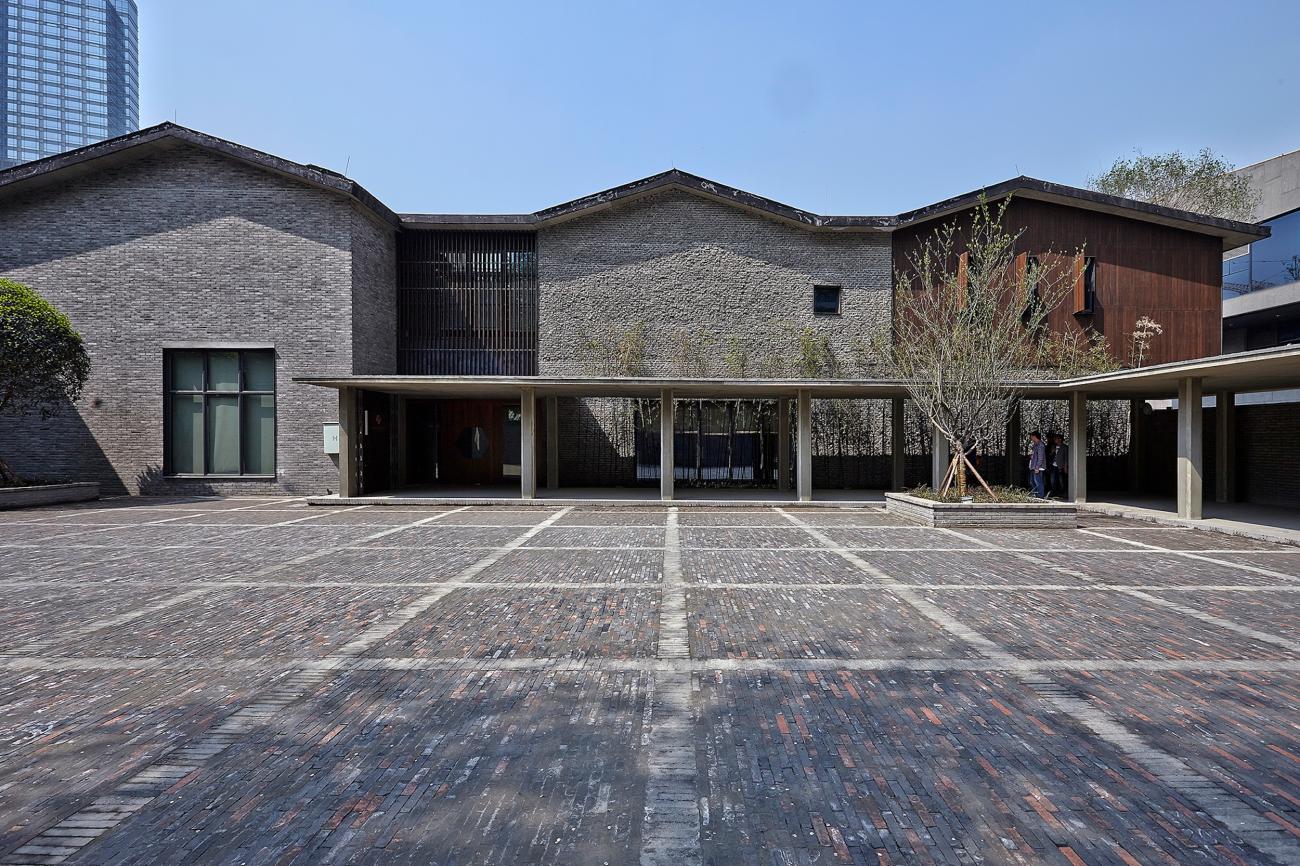
They have their beauty as objects of art, but certainly not as a place that I would enjoy occupying or being around. Brutalist architecture with a Chinese flair.
And why do you think that matters to this topic at all? I don't live in SF I don't know about its crime rate. How on earth is the architectural quality in any way shape of form related to crime rates? Why even bring up such a ridiculous unrelated point?
Its about aesthetics and if you can't figure that out then its obvious why you find bleak soviet apartment blocks appealing and concrete bomb shelters.
That location in SF then isn't an example of brutalism or soviet aesthetics either if I go by the photos I found on the internet. It was a totally irrelevant example.
$1400 a year in electricity at a high rate of $0.15/kWhr for all 8,760 hours in a year is about 1 kW in power savings. Reality check:
A typical 3-phase 2hp industrial motor [1] is over 85% efficient and typical 10:1 reduction gearbox [2] is 94% efficient, which results in about 3kW power usage and 20% power lost to heat, or approx 0.6 kW. If their motor is 100% efficient, used in a 100%-duty-cycle application, in an area with high electrical costs, and with similar reliability to the standard AC motor, this gives $800 or so in savings per year.
In a more typical application with a 50% operating duty cycle and $0.10/kWhr, and guessing at 96% efficiency for their motor, we're down to maybe $200 per year in savings. Larger (>=5hp) motors can be 91% or higher efficiency bringing savings down even more. I can't imagine how C-Motive will equal the reliability, so any extra maintenance could quickly wipe out the savings.
I would guess that a variable-frequency drive (VFD) on the above AC motor, used to control speed and improve the power factor, would have the same efficiency as their motor controller. So I only looked at the AC motor + gearbox versus the C-motive motor + fluid pump.
I often ponder what the generator algorithm might be when I am solving "insane" 13x17 Kakuro puzzles [1], because there always seems to be just enough logical paths to solve each puzzle. Well done!
I would suggest the same hardware solution, where the USB powers a device-side presentation of the raw data into a more universal mass storage device. This also allows file transfer to any device without requiring special software. I did something like this in 2008 or so (using a FTDI chip and PIC mcu, and boy was it ever slow).
As usual it's complicated, and it depends on which study you pick, and which model and parameters the researchers used. This study suggests that more anthropogenic sulfate aerosols in the air (usually from burning coal and other fossil fuels) could cool Artic summers from low clouds but warm Artic winters due to high clouds:



reply