I really hope people don't take this result at its face value - the model used and the approach is extremely simplistic, which is essentially a pseudo 2-D simplification of urban canyon geometry, a street with buildings on either sides. I worked with the referenced model as part of my master's thesis.
The bulk of urban heat island effect is driven by the radiative absorption of non-porous materials of the built-environment. Other heat waste put into the area accounts for less than something like 5% of the additional heat added when compared to rural areas.
I've got F'all qualifications, but I can read and remember which means I also know Ozone (O3) levels can trap heat[1], and heat is Infra-Red (IR), a large part of the electromagnetic light spectrum [2] and ozone happens to be considerably higher in built up in areas[3], also contributing to the Heat Island Effect seen in towns and cities.
So whilst I cant find a copy of the study, and I recognise your comment on the modelling and approach being simplistic, the above also demonstrates that other factors like increased number of vehicles on the road, can be a factor as they contribute to ground level ozone and many also come with an air conditioning unit built into the car as standard today.
On a hot sunny day, the blacktop beneath the traffic jam is radiating more heat than all the cars on top of it are creating.
And a car engine is producing far more direct heat than the increase in ground-level ozone from exhaust pollution is increasing heat (from that same car).
Also the fact that cars have air conditioners is a total non-sequitur. The air conditioner in the car requires negligible energy compared to the force required to move 4000 pounds and 1-5 people at 70mph.
This maybe true, but I'd argue the air con still takes about 5mpg off the range of the fuel, but their existence and heat isnt magically disappearing, it spreads out helping to raise temperatures.
This link [1] suggests traffic jams can increase temperatures by 7 degrees Celcius.
> the model used and the approach is extremely simplistic
Seems like a constant in doomsday "science": making a model that bear ressemblance to reality as much as SimCity does, run it to get the expected conclusion, then extrapolate and conclude with newsworthy title that X or Y is true in reality.
>then extrapolate and conclude with newsworthy title that X or Y is true in reality.
It's worth noting that this portion is generally done by science reporters rather than the scientists. It's quite often the case that alarmist articles refer to research with much more measured and less sweeping claims.
No they aren’t in this sense. I’m really not sure what you are attempting to convey here, maybe you’re being defensive for reasons unrelated to this topic, but your links aren’t talking about doing ultrasimplistic studies that don’t properly model the problem and treating results as fact. They mean simplicity in the Occams Razor meaning. Occams Razor is about the simplest solution being the most likely (e.g. don’t invent a ton of conclusions) and in fact is a philosophical argument for the existence of god.
Please don’t condescend people and definitely don’t go around arguing that science holds unrealistic simplicity as a core tenant.
The comment I replied to seemed to make the following reasoning: "a lot of junk science uses oversimplified models; this work also uses an oversimplified model; therefore, this work is also junk science".
And my intention was to point out that this kind of reasoning is invalid, because simplification is an important aspect of the scientific process.
This is one reason I heavily push for roof top solar, even if it is a bit more expensive than utility scale. In many areas air conditioning is pretty much a given at this point.
A typical solar panel absorbs ~20% of the sun's energy blasted on to a city rooftop. If that's used to power air conditioning it's doubly effective. You're reducing the heat urban heat island effect from the sun's energy, and you're also not adding additional heat from external power sources in to the city.
On a large scale this would really help make cities more livable. On a hot summer day here in northern Kentucky I noticed a massive difference (I've roughly measured it at a 5-7F difference) going from less developed areas to the more urban areas.
With regards to temperature, there are more levers to pull, like the aspect ratio of the street (narrower = cooler). Architects in Taiwan and southern China have been studying arcaded streets (qilou/騎樓), which seem to be as good as trees for shielding pedestrians [1], except in situations where the sun might shine through the sides or ends.
Of course, trees are great for many other reasons like air quality, but for temperature fundamentally they're just big evaporative coolers. I wish cities in more water-stressed areas would consider arcades + rooftop solar.
The big advantage trees have ove most man-made shade is that heat can convect through them. If you’ve ever sat underneath an umbrella at a café versus a beer garden under trees you’ll notice the difference. The umbrella shades, but traps reflected heat, re-radiating it below.
Trees also provide a significant cooling effect by releasing water vapour into the air from the soil (evapotranspiration), which you won't get under an umbrella.
Qilou seem much more oriented around shelter from the rain than for shelter from the sun, though. I agree that they're a great addition to urban streets for pedestrians!
Leaves block the Sun relatively high off the ground, meaning people are in the shade during the hottest part of the day and feeling as much radiation off buildings and streets in the evening.
Beyond cooling they’re also good for water management. Most street trees don’t need any watering (at least in the Midwest) they live off rainwater. When it rains, water pools on the leaves and evaporates from there, reducing the amount of run off and keeping the street drier and less humid on days with light rain.
In cooler months (and places where this is relevant) the leaves fall and you can still get the warming benefit of sunlight.
I love trees and want more of them in our cities, my only point is that they are not usually a substitute for HVAC unless your climate is in a precise sweet spot of plentiful water, dry air, and not too much heat. Rather than letting wishful thinking snowball into bad policy and disappointment, let's promote trees by focusing on what they do well (what you've mentioned plus aesthetics and sound damping) rather than by ignoring the limitations of evaporative cooling.
In which climate zones do trees not make their surroundings more temperate? Trees live from Alaska to the equator, and from the coast to near-desert. They are not de-humidifiers, but they certainly regulate temperature.
They reduce the load. I live in a place with hot humid summers. My block is shaded with mature oak, nut and maple trees. There’s always a breeze, and less solar energy is absorbed by blacktop.
I guess we disagree on what trees do well. I’m in the Midwest with warm semi humid summers. Trees keep the area around them massively cooler, not by evaporation but by shading.
Maybe it’s a disagreement of terms? I guess they aren’t technically “cooling” the area in an active sense, but they absolutely keep it cooler even when it’s 95 and the dew points over 70
I live in Vietnam. It is 8am right now and the dew point is 80. It only 80 at the moment but is supposed to get up to 90 later in the day. I assume the dew point will also go up to around 90.
AccuWeather says the "RealFeel" will be 97 and "RealFeel Shade" will also be 97, so being in the shade does almost nothing, since it is overcast and raining very slightly at the moment.
We're not in a heat wave or anything, this is just normal weather basically year round. If anything it's been especially rainy and cool the past few weeks.
Trees are nice but are not remotely a substitute for air conditioning. Trees do not lower humidity enough to stop the average European/American from sweating constantly just sitting still here.
Vietnam is sub-tropical, not directly comparable. Better to compare Vietnam to itself, with and without trees. How much hotter is it in the city compared to the jungle?
of course trees are not a substitute for air conditioning. but, on a sunny day a street heavily shaded by trees is significantly cooler than the same street with no trees. this is true no matter how hot out it is
that's not to say that the heat under a trees' shade cannot still be oppressive. merely that shade matters, as the existence of two "RealFeel" measurements you shared indicates
Going back to the beginning what started this is a debate about whether trees cool cities.
I don’t think anyone (certainly not me) has intended to argue that trees can replace AC, just that they make the city around them (including indoors in many cases) much cooler than they would be without the trees
The shade is the important effect. Air conditioners have to use energy to remove heat from the indoors. That means that if the indoors are less hot, then you need to move less energy out of the room. Trees are great here, because the trees stand in the way of our solar system's largest energy source and the indoors.
To be fair, things like insulation are also good here. You want something outside to get hot when the sun shines on it instead of whatever space you're cooling.
(There are, of course, many heat sources inside that are annoying. I was running some fuzz tests yesterday and was annoyed to watch my air conditioner scale up in power to remove the heat that was wasting. I guess that's why people use The Cloud for everything. You can heat up someone else's city while enjoying the comforts of home!)
Apparently a good part of the reason (parts of) the Midwest can get uncomfortably humid some summers despite being so far from large bodies of water is the evapotranspiration from the crops (mostly the corn). So too much evapotranspiration is not always a great thing!
With enough trees the microclimate changes enough that precipitation is more likely in that immediate area, which compounds the cooling effects on average.
I can't- the solar company I talked to said there's too much shade on my roof for too much of the day, there's no way to place the panels to make financial sense before the panels need to be replaced.
It seemed a bit odd, because my roof is fully lit up, but only for a few hours a day- one half is covered most of the morning, and the other half most of the evening.
Sadly, it's not even really nice trees, just gigantic cottonwoods that litter leaves and twigs and sticky leaf pods like crazy.
Wait a couple years and check again. With micro inverters you can deal better with partial shade. They're probably right that it makes no financial sense now, but that changes over time.
The problem with solar is that unlit panels behave like a diode and no current flows. Chain together a lit and unlit panel and you get nothing. Put the inverter ahead of the interconnects and that's not a problem.
The problem with rooftop solar in the US is that the install cost is so high. Even if the panels were free, there are many areas where you'd be looking at 15+ year payback, which is a bad investment.
I'd love to do solar, but the only way I can make the numbers work is if I DIY'd the full install.
What makes the install cost high? Where I live in Australia, 44% of houses have rooftop solar and installations seem to be done in a fraction of a day. Seems like a pretty efficient process where they bolt racks to the roofing iron and then attach panels to the racks, wire it up, etc.
Your 5-10k range installs will be $10-20,000 AFTER the tax credit, which might be a little higher now than when that graphic was put together.
Of course, this doesn't account for things like needing to re-do existing electrical work to get affected areas up to code, or if you need to replace the shingles on your roof while you're at it because it's typically recommended to do both at the same time if you're going to add solar.
Then again, you may also have the problem of ensuring your roof will withstand the extra weight, depending on the system. Most people are probably fine here, but for older houses in snowy climates it's worth thinking about as well.
I've looked into solar for my house. Aside from not getting enough sun throughout the day due to tree shade, there's also the problem that every solar calculator available wants to pretend that energy prices are going to go up 5% a year. Well, I've lived at my current house for 5 years and they haven't gone up once. The real payback for me is 20 years, if I'm lucky, even without the trees in the way.
Wow. That's quite remarkable. 7kW here was under US$4,000 including inverter, panels, installation and accounting for government rebates (some sort of credit system that the energy company handles by buying your credits off you, AFAIK). That was installed onto typical industrial metal roofing sheets - not sure of the name of it. Similar price at home installed onto corrugated iron which is very common in Australia.
Assuming you want net metering, you’d need controls in place for grid safety and such and all the permits and inspections which take time and cost money.
I imagine all that is pretty standard here also - South Australia isn't exactly without regulation or seemingly high labour costs. I used the same company at the office building and then at home, and each was painless. Approve an easy quote and then everything is later installed on a particular day. Both were in the 5-10kW range.
At the office building, the estimated payback was all of two years.
They can, but you need a suitable equipment- thicker wires, at a minimum. Wiring in parallel means the voltage is the same regardless of the number of panels, but the current sums up- so your inverter and/ or controller will need to be rated appropriately.
If you want to play that game, a sizeable part of the tree population is just going to migrate north/south.
The more immediate problem with climate change isn't that there won't be enough places to live/farm, it's that it's all going to move causing destabilization of societies.
The long term effects of running out of arable land are a considerable distance in the future.
Yes, I know but I can't make the whole list of climate change consequences for humans under each commment so I try to alert people on a part that seems relevant. Me being dark is not me trying to play a game. I have not mentioned arable land at all. If you don't see the problem of tree populations dying out I don't know what to tell you. Trees take time to grow and we need them to store carbon. But, fine, I concede to your point, we'll start killing other/get authoritarian states well before we run out of food. Somehow that does not make me feel better.
Also your framing of the question *you* are bringing up is weird. Climate change will make for climate conditions that will make agriculture *harder* in general, I don't think your model of "Oh well we'll go to cold places that have become warmer" is really relevant and by the way arable land is already a resource some states are competing for.
Maybe I'm missing something, but I don't see how we'll ever run out of arable land. The Earth has been warmer than now, in the distant past: there were times when the poles were not frozen over. Of course, this means the sea level was higher than now, so melting all the glaciers means a lot of our cities (and probably most of Florida) will be underwater, and it isn't so easy to pick up a city and move it to higher ground. A warmer Earth probably means more deserts, but there should still be arable land, in places that are currently cold tundra perhaps.
The end-end-end game is Venus-like conditions on Earth. I find that pretty unlikely though considering that population would be so reduced significantly much before that and industry would be effectively stopped. As long as any biology survives, they'd likely eventually be able to reverse the changes.
I don't see how. As I said before, the Earth has been hotter than it is now. We're currently in an ice age, and coming out of it: that's why we have ice on the poles. The Earth was never like Venus, and never will be; the thing that humans are doing now is burning a bunch of carbon that was stored in prehistoric times. Back then, it was all in plants in the biosphere, when the Earth was warmer than now.
I have mixed feelings about this. My neighbor cut down their tree, and now my living room enjoys a lot more sun throughout the day, and my yard has a lot less trash to cleanup.
My neighbor shields much of my house from the sun. We had issues when his branches started touching my roof, but we made sure it was trimmed in a way to still give us the shade it has all these years.
In the meantime my neighbor at my last house wanted me to limb up the conifer trees past my roofline so that he didn't get needles on his car.
One that wouldn't work. Two, those trees would have fallen on his house in ten to fifteen years because his house was east of the trees, and 'lions tail' tree pruning creates a giant lever arm and the roots will lose that battle in the first wind storm after a rain storm. That pattern had just played out ten years prior all over town. Big pruned Doug Firs falling onto people's houses.
What you want is to be able to be able to walk under a tree with your arms over your head and not hit branches. No more, no less.
I think an interesting way of doing this would be to have tree-like solar panels. they would be somewhat wasteful in some ways, but would organically gather solar energy at a variety of times from a variety of directions. They could also provide a % of light through in all directions to give partial shade and coexist with trees.
You will still want airconditioning in a great many cities. It gets to 45c in the forest here, no amount of trees will help the city, although of course they are still part of a good solution.
As always it's likely a combination of solutions, and rooftop solar is a good idea for more reasons than just heat.
It's a huge benefit to the crowds at street level, and keeps the city cooler overall because all that concrete is not being turned into a heated surface. They're not generally there to shade the buildings, but the people and roads.
I think of the cities in Spain with the hottest climates, and I don't see a lot of crowds being protected by tree shade: Instead, the traditional design is narrower streets which aren't straight for very long, and even white cloth hanging across the street to provide the shade directly.
It's not that there's no trees, but you'll see them in parks and boulevards that might as well be narrow parks.
If anything, I see far more trees in the American midwest. Here the streets are very wide, with basically no foot traffic to speak of, and too much road for the number of cars that use the street in urban areas. You can definitely fit trees here, but that's because so much of that concrete is waste. The extra trees just mean more distances, and more distances means more parking lots and more concrete.
I can look at the wet-bulb temperature and see exactly how far trees will get me. This time of year, it isn't far -- which checks out, because I have plenty of trees and they don't stop the heat. Swamp coolers (trees are swamp coolers, thermodynamically speaking) are brilliant if humidity is low and freshwater is plentiful, but if either of those wheels come off no amount of wishful thinking will make evaporation work comparably to a refrigeration cycle. Where I live, it's the humidity. Fortunately, I do have real AC, and even better, my power mix is predominantly nuclear so I can crank that AC and get real cooling without pumping legions of dead dinosaurs into the sky. Damn it's nice to live in the 21st century. Or the 20th.
I don't know exactly how many degrees the shade will bring the temperature down, but just today my portable temperature sensor reported an 8F degree difference compared to one in the shade - both were in the same area of the house, but one happened to be where sunlight was coming in from a narrow window. And the sensor was in the sunlight for under an hour when I recorded the difference.
Of course, this is spot heating, and over a whole house the effect will be diminished, but it tells you how quickly things can get hot.
No, I did not forget that shade exists. It's still uncomfortable in the summer. Once RH hits 100%, evaporation stops cooling and your options are to go without or to use a different thermodynamic cycle.
We've got plenty of freshwater in these parts, but in other places freshwater availability will be the limiting factor. Famously, swamp cooling works great in the desert if you can spare the water.
Trees are great, let's just be real about what they can and can't do.
No. I don't have to. The wet bulb temperature will tell you enough. No amount of trees will lower the wet bulb temperature. I live in an area with humid summers so trees help but are no solution.
A tree growing is itself an endothermic process, in addition to the passive shade and quasi-active evapotranspiration it exhibits. They will help in multiple ways, but of course only up to a point.
Considering that solar panels are close to perfectly black, they will also close to perfectly absorb the remaining 80%. The 20% of solar electricity that is then used for AC, will be released as heat as well.
You've just made a ~100% efficient heat capturing machine. The 98.1% reflecting paint will be much more efficient, with the added bonus of not being dependent on the grid.
Are PV cells really that black for photon energies below their bandgap?
It would be nice if the cells were highly reflective at a range of wavelengths between the range they can actually use and the range where they radiate waste heat.
Yes they are very black in the visible spectrum. Like the parent said a highly reflecting white paint for rooftops would certainly be the smarter choice.
They are usually reflective out of band, for unifacial (ito on semiconductor on a metallic backing), so ~40% of the radiation is heading back to space, vs 10-20% for a typical roof.
However... that means they don't radiate well at night (they have low emissivity and are not well thermally coupled to the roof). Painting the roof white is ideal.
I wasn't talking about the visible spectrum, I was talking about near IR below the bandgap (which is just below visible for Si cells.) This light does not contribute to the output of the cells, so reflecting it back into space would reduce heat generation at no loss of efficiency. If anything, by keeping the cells cooler it would slightly boost efficiency.
You can do both, typical rooftop solar installations typically don't cover the majority of the roof. Make the rest reflective and/or make it a space for people. Rooftop area has some of the greatest views in any city. Kinda crazy that we don't use it as space for humans and greenery in most cases.
I want to point out that to optimize for temperature reduction, you want to minimize absorption while maximizing thermal radiation. This says you want the surface to be reflective at wavelengths below some cutoff, but perfectly emissive (that is, black) above that wavelength. (Actually it's a bit more complex, because the atmosphere emits IR in some bands.)
Some work on surfaces of this kind have shown promising results, being able to fall below ambient temperature even in full sunlight.
Rooftops are great, we have a 100m2 rooftop terrace and kids love it. But I had no idea how hot it gets. To the point where I don’t even step outside during those heatwaves. When the offical temperature was 36C we had in fullsun above 46C and the concrete panel was too hut to wall barefoot. So my take is that in dry/hot areas rooftops are just unliveable.
Definitely depends on the area but there are flooring options that stay cool, and if really hot weather is a common issue, a misting system can keep things surprisingly cool at the cost of some water use.
I wonder, would that make for some interesting (or potentially problematic) visual side effects in an urban environment? With the variety of roof angles and sun angles, suddenly all manner of observation points (e.g. on roads) would potentially be subject to blinding reflections at different times of day and year.
These concerns already come up with things like glass and metal clad buildings - plenty of urban zoning codes already account for the light that reflects off new or modified structures (or at least try to).
It tends to be newsworthy when it goes wrong, because the results can be things like buildings cooking nearby objects at certain times of day. Spicy stuff.
Fair point. In hindsight, my mind had wandered off unsupervised, and was picturing the unadulterated chaos of an instant universal conversion of all existing rooftops to super-reflective.
"All will be simultaneously unveiled at 12 Midday tomorrow, citizens, so, ...take care out there!".
You seem to be assuming the surfaces will reflect like mirrors and not as if they are painted white. There is no reason the reflection would have to be specular.
My point was that a carbon black shingle would result in a much higher amount of work required to cool the inside of the house because you'd be baking yourself alive. The standoffs for solar prevent that. Which at 20% efficiency panels, back of the envelope says that could end up cancelling out the benefit of the panels entirely, for more than half the year.
I wondered this a long time ago too (if solar panels cause more heating by absorbing more), but actually they still reflect a fair portion of the suns energy. [This article](https://www.treehugger.com/ask-pablo-do-solar-panels-contrib...) says earths average reflection coefficient is ~0.35, and that cities are more in the range of ~0.1. Solar panels are ~0.3, so much better than many existing roof materials and of cities in general.
It can't be "doubly effective". The energy cannot simply disappear into the void. If it is used to run something electrical in the house, that energy is still there. If you ship it into the grid and across the country, less of the heating is localized. But it is still heating as it travels through the wires.
As it turns out, solar panels are often more reflective than the typical roof of a house in North America. So solar panels can actually reduce the heat island effect. But it is mostly independent of whether they are hooked up at all.
There's one other minor factor that helps even if the solar panel did nothing:
By making the sun hit at a layer above the ceiling (and assuming you have proper air circulation below), your attic area will heat less, hence your house will get less hot.
(This is similar to the effect you get by staying under a tree shadow)
As per the article, yes, if everybody had air conditioners city wide that would increase the city temperature. But that would require everyone to blast it at the same time
That street's sin is not the lack of trees, but having 6 entire lanes for cars, which apparently all go in one direction. An uncrossable nightmare that only even has stores at one side!
Those nice trees take a few decades to grow, need serious pruning, will cause foundation problems next door, and increase building setbacks anyway. We also waste two entire lanes for street parking, have basically no businesses on either side anyway, and the street is still too wide. It might be urban, but it's still a car centric hellscape, just with some shade.
That's an illusion because from certain angles the mirror is much brighter, and you don't pay as much attention to all the angles where the mirror is darker.
An ideal mirror reflects 100% of the light, and so does an ideal white surface. The white surface just spreads out the light.
If you light a mirror evenly from all angles, it will be indistinguishable from a white surface.
You can do both - having solar panels over a reflective white roof (like the fancy newly discovered passive radiative cooling paints) helps increase PV output by cooling the panel.
The solar panels will still absorb and radiate heat back so you won't get as much cooling as you would have just with passive radiative cooling paint, but it'd be better than just solar on a regular roof in both ways (solar output and thermally).
Wait what? An AC does not simply turn hot air into cold air. It "moves energy" from one place to another.
Indeed it would be nice to power the AC with solar power, but how does this help the city to cool down? You would cool down the houses, but the heat from the houses would remain in the city, it would even get hotter.
The argument is that you aren’t moving additional energy into the city from power stations to run the AC, which ends up as heat. Instead you’re using energy that’s already radiated into the city from the sky.
As others have pointed out, you might do better bouncing the incoming radiation back out of the city with white roofs. And still others say you can do a bit of both.
Also, you could definitely do well to reduce your roof albedo by switching to white/reflective roofs. This point has been made endlessly over the last 30-40 years. No one actually does it. People are actually installing solar panels.
You can also insulate roof and it'll just heat air and radiate energy in cosmos. Heating air is not a problem because it's already somewhat high and will only move higher.
> A typical solar panel absorbs ~20% of the sun's energy blasted on to a city rooftop. If that's used to power air conditioning it's doubly effective. You're reducing the heat urban heat island effect from the sun's energy, and you're also not adding additional heat from external power sources in to the city.
You’re not reducing energy here. If you gather and then release the energy again (make it do work) it’s simply being re-released.
Honestly you'd get a much more effective reduction in AC needed, for much less money, by putting a decent ceramic tint on all the glass. There are quality tints these days that have minimal effect on visible light while blocking 90%+ of IR.
I have roller shutters on my east and west facing windows, and my north facing windows (this is in Australia) get no direct sunlight because they are shaded by my patio. So no direct sunlight is coming into my house through the windows. Still in summer after ~2pm the house heats up. I think overall my house is decently insulated from the sun because in winter my house is extremely cold (what little heat the sun could give doesn't get in to my house). Recently in early spring there were days when the outside air temp was hotter than in my house.
I think reducing the absorption of the roof and the walls would help, but even then you have still have a house sitting in 34C+ air temps for at least 10 hours per day, so it gets hot. But when I consider my dads house, which has 2m eaves all around, high ceilings, and massive roof space - it still gets hot. His house might feel nicer without a/c during early summer, but by mid+late summer it is hot too.
Maybe better insulated doors+windows would help? My house is double brick walls. Maybe the "outer layer" needs to be able to get hot, and then the "inner layer" insulated from the outer as much as possible. That's a lot of change though. Instead I just run the a/c all day "for free" off my solar panels.
When you say efficient it makes me suspicious. Just because a plant doesn't absorb the energy for conversion doesn't mean it doesn't absorb it as heat. Remember, they're quite connected to the ground so they could be good heat dissipation (I have no idea, just speculating.)
By coincidence I was walking around Paris today in 30+ degree heat. It was only really bearable in the shade, which the city has a lot of thanks to a good amount of trees lining the sidewalks. It was quite pleasant until we passed a convenience store and the heat and humidity of that part of the street immediately rose to oppressive levels. This was because an air conditioner for the store was venting into the street.
The effect is stark and incontrovertible. There is the heat being removed plus some heat from the compressor and fan. Everyone in public and private spaces will be better off if we reduce AC usage as much as possible in favor of other solutions
It's not (just) the a/c in the store, it also has huge refrigeration units.
In Asia, 7-Eleven is famous for its chilled air, but also has the walls covered with refrigerators for cool drinks, and there may be freezers for meat, seafood and ice cream.
In Las Vegas they solve this by blowing cold air onto the sidewalk through an always-open door, thereby cooling passersby, and perhaps enticing a few to enter for a game of slots.
That doesn’t really solve the problem. They’re just dumping the waste heat on the back of the building where tourists aren’t walking. And producing more of that waste heat because they’re trying to condition a leakier building.
In Paris small shops like that typically don't have a vent on the roof, so they need to vent heat to the street at pedestrian level. Easily solved, if people cared.
It annoys me whenever I see a single hose AC unit period.
It just makes no sense to me.
First, you are now pumping air from inside the building to outside. You aren't creating a vacuum inside, so all that means is somewhere else in the building the air is being replaced from the only place it can... from outside...
Second, the air you are pumping outside contains some of the air from the inside space that you just spent electricity cooling...
I use a mobile AC unit like this because it's really the only type of unit that will work in my apartment, but I use a dual hose unit. The unit has 2 air loops. Air from the room is drawn in from the back of the unit, heat is absorbed by the heatsink, and then cool air is blown out the front of the unit into the room.
Then to dissipate the absorbed heat as well as the heat from the electricity being consumed, air from outside is sucked in through 1 hose, runs through the other heatsink, and then is expelled back outside again from the other hose.
It just makes so much more sense, and if you can stick 1 hose in your window, it's really not that hard to stick 2.
You want air changeover. Low changes/hr leads to high indoor co2 and is just in general bad for you.
"ASHRAE empirical research determined that "acceptability" was a function of outdoor (fresh air) ventilation rate and used carbon dioxide as an accurate measurement of occupant presence and activity. Building odors and contaminants would be suitably controlled by this dilution methodology. ASHRAE codified a level of 1,000 ppm of carbon dioxide and specified the use of widely available sense-and-control equipment to assure compliance. The 1989 issue of ASHRAE 62.1-1989 published the whys and wherefores and overrode the 1981 requirements that were aimed at a ventilation level of 5,000 ppm of carbon dioxide (the OSHA workplace limit), federally set to minimize HVAC system energy consumption. This apparently ended the SBS epidemic."
Unfortunately dual-hose ACs are not widely available. I just couldn’t find any when I was in the market. It’s single-hose only in my experience. Why this is I don’t understand. Had to buy one and try it to finally conclude that I was sane and society was crazy.
Worthwhile noting that most single hose AC units can usually be converted into double-hose with some cardboard, hose, and a lot of duct tape.
It's worth doing too - you'll normally get almost the double the cooling effect from a double hose unit of the same wattage as a single hose one, just due to the fact you aren't wasting coolness out of the window.
If you do this, note that it's important to use extra large and short (insulated) hoses, simply because the blower fans in your unit aren't designed for so many yards of hose.
If the outside temperature is lower than inside then single hose is at least as good, as long as you open a window somewhere else so outside air rather than some other apartment’s air is sucked in
Single hose portables are bad in countries where air con is practically essential, but are fine or even desirable for countries where only a handful of % of people have AC - the purchases will be for use cases like attics and top floor apartments where inside can be easily hotter than outside
Some people aren't allowed (rental) or cannot afford built-in AC units. I've got a mobile one in my attic where I WFH because otherwise it gets to 30c+ and that's just unbearable.
I can see why seeing someone else making poor choices wasting their own money, making their quality of life worse, and destroying our shared environment, could be upsetting.
In a way it's worse than seeing strip mining, or those people who fish with dynamite, or people who litter. At least all those people are benefiting from their environmental destruction.
All electricity used in a city ends up as waste heat - AC is no different. If AC is using (as claimed in the article) 10% of a city's electricity, then it is responsible for 10% of the waste heat in that city.
There could be a short term spike as the AC rejects interior heat from buildings to the outside, but that will be balanced out later as outside heat is absorbed by the cooler buildings, or as cool air leaks to the outside.
The issue IS the short term span. Nobody is complaining about ACs making cities hotter in winter. The issues comes from the fact that AC rejects heat from buildings when it’s already hot outside. It renders the city unbreathable in summer.
Time of year is not the issue. As soon as the system is in equilibrium, the contribution of AC is just the waste heat of the energy consumed. This is just thermodynamics / conservation of energy
If you're talking about the heat island effect? The hotter it is outside compared to the desired inside temperature, the less efficient heat pumps get. Also the hotter you make it outside the harder it is for your neighbors to eschew AC in the first place. In a part of town where some critical mass of people have AC, the remainder will be forced to flip. And when that happens, there goes your 10% of all power is used for air conditioning.
This sounds wrong, lots of electricity does useful work that doesn't turn into heat (moving an electric vehicle, making plastic items) or escapes as other waste (light, sound, etc)
In the case of the car: when you accelerate, it turns most of that electric energy into kinetic energy (and turns some of it into heat). As you cruise along at a constant velocity, it's turning most of that electricity into heat: It's overcoming air and road friction, aka, rubbing against things and producing heat. Etc.
Waste light and sound get absorbed by surfaces, thus, turned into heat (unless the waste light is in the right IR band to pass out through the atmosphere).
What about flipping bits in a processor? Current processors do produce waste heat, but I don't think all of the energy in a processor gets converted to heat and it's not a requirement for computation that heat be generated, e.g. if we had superconducting processors.
It's not necessarily a requirement (see reversible computing), but we're very far from knowing how to do it if indeed it's possible at all. current processors do convert all of the energy they use into heat. To set a transistor one way, you put a bunch of charge onto its gate. To set it the other way, you take those electrons and dump them to ground. All of that current flowing is converted to heat.
> On the other hand, recent advances in non-equilibrium statistical physics have established that there is no a priori relationship between logical and thermodynamic reversibility.[19] It is possible that a physical process is logically reversible but thermodynamically irreversible. It is also possible that a physical process is logically irreversible but thermodynamically reversible. At best, the benefits of implementing a computation with a logically reversible system are nuanced.[20]
Those are actually all converted to heat eventually, just with more steps.
Moving an electric vehicle causes motion, but that motion is absorbed by the air and ground via friction with both, aka heat.
Light is just energy in a photon — when it hits a surface that absorbs it, it becomes heat. And it can be quite a lot actually! If you put your hand in front of a really bright flashlight, you’ll notice a warm feeling. If you turn off the flashlight, it goes away immediately, proving that is the light itself causing the heat.
Approximately all of the energy we use as electricity is just changing something into heat with some useful work in between
Think of heat as like nature's income tax, every energy transaction you do is subject to a heat tax. Eventually almost all energy is converted into heat. Even the sun converts every chemical into its lowest energy state and releases all that energy in the atoms as heat. The primary thing the universe currently does is turn matter into heat, and tries to distribute that heat evenly.
Eventually most of the energy for earth either becomes heat in the earth, gets radiated into space, or slows the earths rotation around the sun, or spin. Of all of these things the dominant two are heat radiating into space (this is by far the largest), and heating the earth, with a few things like the tides slowing the rotation of the earth.
A little bit of it gets stored as chemical energy through plants and animals, but eventually those get burned either through fire, or chemical decomposition.
To give you an idea of how much heat escapes, if the sun stopped, and we used our nuclear arsenal to replace it, we'd have about 30 minutes of sunlight.
The idea that AC causes heat in cities to any real extent is laughable, if AC was capable of changing the temperature of the earth to any meaningful degree we'd just water cool the heat exchanger and solve global warming by dumping the heat into the ocean.
Moving an electric vehicle turns into heat. Because routes are cyclical all of the potential energy turns into heat in the end. You buy a book case and haul it to the top of a hill, eventually that book case is going to the dump, which will be downhill.
Manufacturing products via endothermic processes does not turn all of the energy into heat, but then again exothermic processes can exceed the energy used.
A lot of things are making everything including cities hotter. Here in Texas it was 110 at my house yesterday in September. I live way way way outside of a large city. I personally think concrete/asphalt absorbs and retains a lot of heat keeping things hotter. If we could just reflect more back I think it'd help much more. I have solar on my house and it practically pays for my AC Bill.
Hotter air results from the hot concrete. Then the air has more capacity for holding water instead of precipitating it out as clouds or rain. This increases the likelihood of 100%RH conditions, in direct sunlight, on top of a huge thermal mass heated to way above body temps, making heat waves deadlier because evaporative cooling becomes moot at that humidity and you're essentially in desert conditions surrounded by hot rocks.
I had to leave vegas at 4am this summer. The city was 72 or so degrees but as soon as I was out maybe 5-10 minutes of driving, it was 50-60. Unbelievable.
Good link posted by s0rce in another reply, the authors' research seems to indicate the global effect is quite small, which tracks with what we might expect - it's a really big problem localised in cities because so much of the area around us is paved, but on a global scale the surface area of paved urban areas is not huge as a percentage of the surface of the earth.
This site allows you to check various weather stations and see temps as recorded at the location.
You can compare your location to others less or more urban and see this while its happening. Next time you're awake at 3AM with nothing to do check it out! Compare downtown Austin to the suburban area of your choice. I saw a 2-3 degree difference pretty regularly last I looked.
The article you have linked to literally contains the phrase "Air temperature is increased by up to 2.4°C" citing the conditions under which this was observed. Have I completely misunderstood what you are trying to say?
Kinda weird. Of course air conditioning makes cities hotter, but the point is kinda to cool down the insides of the house, not the outsides. Small enclosed areas are a lot easier to cool.
Heating up the 40 square kilometers of city outside by 2.4 degrees reduces 1 sqkm of inside temperature from a sweltering 30 to 23 degrees (note, made up numbers).
I've been looking at getting shutters on my windows; They're not common in the UK but are common in more southern European countries. Unfortunately UK windows are designed without the expectation that shutters might be installed. Also it seems to require planning permission to install them on street facing windows too, as they are not currently one of the exceptions. But installing air conditioning (and heat pumps) does have an exception. This needs to be fixed.
I don't know if that is a joke, but shutter != gutter. A shutter covers the window during hot weather to keep the sun out and keep the building cool, and can be opened during cooler weather.
The relevancy is that unlike air-conditioning they don't consume power or heat the surrounding city.
That would seem inevitable, so the only real question was how much (+2C.) So, how much cooler does the city with many heat pumps get in the winter then?
Effect must be less. For AC, you're transferring indoor heat outdoor AND generating excess heat from running the AC itself. For heating, the excess heat generation presumably works counter to the heat transfer.
The opposite effect I expect should be less for heating, since the heat is constantly leaking out of buildings at some rate back into the environment (insulation, double glazing etc. reduces this but all the added heat eventually leaks out), and additional energy is being put in which turns into heat too (e.g. COP 4 means 1 unit heat from electricity and 3 units shifted from the outside environment).
So whether there is temporary localised cooling depends on the quality of the insulation but overall and over time there is no cooling due to the additional input.
The heat is constantly leaking into the buildings too. I'd be more concerned with differences in efficiency with direction that you mention at the end. In any case, the net result is still negative, so how much negative is still the question that stands.
Well if AC is your cutoff line for the amount of energy use and carbon intensity making things worse, I have really bad news for everyone using heating.
Yes, it’s very simple and undeniable. Instead of AC systems dumping heat into the air outside, they should be dumping it underground or to a hot water heater or something.
> Air conditioners [...] leak harmful planet-warming gases into the atmosphere.
Anyone has a reference about that? Last time I tried to research it, it seems like it was mostly fixed at least in Europe with the most harmful gases being banned for new sales.
The phase-out under the Montreal protocol is an ongoing process, but we are far from there. The HFCs that replaced (H)CFCs in the 90s quickly turned out to be fastes growing category of short-term climate pollutants in many countries in the world [1]. The Kigali Amendment to the Montreal protocol from 2019 now covers HFCs too, and the EU limits them since 2015, but these things take time…
R-410A, commonly used in Europe, has a GWP of 2088. Worldwide, R-22 still is the most common refrigerant. That’s a HCFC, so stratospheric ozone depleting, and with a GWP of 1960.
R-410A is being phased out in major markets including the US too over the next few years (R-22 has been banned for new equipment most places for more than a decade, and is banned entirely in the EU since 2015 for recharging existing units). My Mitsubishi air to air heat pumps (one from 2015 and one from 2018) were already R-32 (GWP 675, Ozone depletion potential 0) and my air to water (Sanden, installed 2022) is R-744 (which is CO2 - obviously GWP 1)
In so-called developing countries, the full ban of R-22 will be 2030, which is a full ban with an asterisk to 2040.
Not saying the phase-out isn’t happening, but there are, and there will be for quite some time, millions of units leaking climate pollutants (which was the question).
Sounds like FUD. A properly installed AC leaks nothing because it is by design a sealed system. I wonder if they feel the same about refrigerators.
These same smooth-brains are probably extolling the benefits of heat pump water heaters not realizing they have the equivalent of an AC attached to them.
This is false. They're not supposed to leak. "Replenish gas reserves" is not a regularly scheduled maintenance item. In fact it's illegal for a technician to add refrigerant more than once without identifying and repairing the source of the leak. Unless you did something stupid like tried to install a split system yourself.
If your unit leaks refrigerant it needs to be repaired. This is not normal.
ICE cars aren't supposed to explode nor are EVs supposed to burst into flames via inextinguishable battery fires.
But sometimes they do.
We don't use this outlier data to refer to them as conflagrations-on-wheels and assert it's a normal function of the device just to strengthen our biased case.
Sure but battery fires are still a problem that needs to be fixed and not ignored. Also, even though it doesn’t happen often, when it does the results can be catastrophic. So it is a reasonable concern.
What? I’ve never heard of a system that (with proper installation etc.) needs to be replenished anything like that often! Where are these brands you’re talking about from?!
Car air conditioners maybe, but it seems unbelievable for fixed systems of any reasonable quality…
Question: is there a huge difference based on whether units are placed in windows vs. on roofs?
Obviously for a window unit or split where the compressor is on the building's wall -- those are going to heat the air in the street. Ground level units most of all.
But a lot of buildings place all their compressors on the roofs. And since hot air rises, does that produce any noticeable effect at ground level?
Just plant trees in the cities. Go and Chech what is the difference of temperature in cities with trees and without. Of course sometimes it's too late: in my hometown they cut away 40 huge trees and made a market square, "because that's what they do in Netherlands" (exact explanation of local ministry), and now you cannot pass the market square in a hot day. Installation of some sort of irrigators doesn't make difference and is not hygienic (see Legionella). They took away trees and grass and made everything concrete.
Meanwhile my parent's home is much cooler, no AC needed because they have trees between the blocks
I wonder more about heating than cooling. Luddite paranoia perhaps but hot air rises up into space and away. Cold air sinks, where does it go? Outside air is a big heat sink but if entire urban areasn start pumping out MW of cold air in the future will the bottom of hills turn into ice rinks?
So lets look at how the refrigeration cycle works here and make some conjectures. If I understand correctly, this kind of system removes heat from one side and moves that heat out the other side. An AC unit with a structure as a barrier is a machine that removes heat from the confined structure and vents it to the outside. So, with enough AC units removing heat from sealed structures and outputting it into the atmosphere, seems plausible that getting enough of them together would behave like a kind of heater.
Now, how did the air inside these structures get warmed up in the first place? Under normal conditions, is the air inside the structures WARMER than the ambient air? Does the structure itself somehow more efficiently harness the suns energy to warm the structure more than the ambient outside air?
If the same energy source is heating the ambient air and the air inside the structures - and it is - its the sun here, don't we have a constant amount of energy warming the area? Some of that energy warms outside, some of it warms inside, but the amount is constant.
So how could a device that removes heat from structures to vent it outside be responsible for a warming of the outside air? Unless the AC itself added some extra heat energy in the process OR the structures somehow more efficiently turned solar energy into heat, how could moving heat around cause a temperature increase?
For example - on a warm day in a little European village, everyone lights a gigantic fire and adds non-solar heat to their homes. The devices that remove the heat would then be adding new energy to constant solar energy heating the town. Ambient temperatures would likely rise. But did the AC cause the temperature increase? Didn't the AC unit just move heat from structure to ambient? The AC added no heat in this case.
Just look at inputs and outputs. Electrical energy goes in; heat, noise (heat), and moving air (heat) come out. Nearly 100% of the energy going into an air conditioner produces heat.
> Now, how did the air inside these structures get warmed up in the first place? Under normal conditions, is the air inside the structures WARMER than the ambient air?
Greenhouse effect + no wind.
The infrared emitted by heated objects are reflected by the glass, heating the room even more
Cities are made of houses.
Houses are made of rooms.
If rooms are hot, aren't cities hot?
If room heat is pumped outside, did the city temperature really change?
What is the heat-island effect?
The answer to the problem is a large increase in surface area of passive cooling technologies to reject sun energy during the day and to cool the surfaces at night through the atmospheric window.
Most of the heat is probably spreading by convecting hot air, not as thermal radiation. A good chimney seems like it should be more effective, though it fundamentally still can't stop the fact that you're converting quite a bit of electricity into heat.
There will be some loss, but the heat trapped in houses wasn't going anywhere anyway. By putting it outside the home, there is a more direct pathway for it to be leaving the city. Though I wouldn't know how to quantify this by any sort of approximation, I assume it's less than the heat added from inefficiencies yeah
I wonder if it means that during the daytime, the cities are hotter but at night, the average temperature is cooler than before? Since all the heat trapped indoors has been pushed out into the world.
Honestly? That's just bullshit to try pushing people against A/C.
Cities are hotter than outside because:
- they absorb more heat :: concrete, asphalt absorb much more than grass or trees and disperse far more slowly. Just go walking in a bush, measure temperature at 1.5 m from soil, do the same in grass covered area and the same over a road. You'll see and feel the difference;
- in cities there are MANY ICE vehicles whose engine produce much heat, much more than any electrical motor;
- in cities there is less air circulation than in the open nature due to the high and heat-absorbing buildings;
- in many cities glass coated skyscraper works like any other glass keeping much of Sun IR radiation inside.
These are the reason why cities are hotter. Another proof? They are ALSO hotter in winter, not just in summer. In winter you can count extra heat from badly insulated heated buildings, little cold pushed outside by the so far limited percentage of people heating with some heat pumps that have air on their exterior side, but look at the numbers and you'll see they are more hotter than mere heats spread outside by badly insulated heated buildings.
People should learn two things:
- cities WAS a necessity to evolve in the past, but with the '80 logistic revolution they lost one of their last reasons to exists, manufacturing became cheaper to do far from customers, so far from cities. With the remote work the last remaining reasons vanish as well. As a result dense cities and high rise buildings have NO REASONS TO EXISTS anymore. Try to keep them and sell them as green, good for the future etc is just a push toward intensive human farming to keep people dependent on service they don't own, living to operate them so they can pay them. Since in the modern era cities can't be sustained the push needs to makes people accept bad living condition as a new normal;
- we need to switch from a high density model, too dense for today state of tech and society, climate etc to a new less dense one, that's hard and that's means MANY will be simply "overflowing humans" to be put somewhere, since no one like that role, if told in such a crude way, some try to advertise such role with various "bells and whistles" but that's simply BULLSHIT.
If you try reasoning about the above you'll understand a thing: such move to put aside a significant percentage of humans can't really work, never worked in history. It does work if the set aside cohort is very limited, the poorest, very isolated and very dependent, but at modern scale can't work.
> we need to switch from a high density model, too dense for today state of tech and society, climate etc
The populations of dense cities use fewer resources than the same population spread out in low-density settlements, especially when those cities are laid out to be properly walkable. It's just basic economy of scale.
> in cities there are MANY ICE vehicles whose engine produce much heat, much more than any electrical motor;
In cities, not having a vehicle is an option. Outside of them, it's basically required in most places.
Economies of scale aren't a goal on their own. Scaling something up will always have side effects... in the case of too dense urban areas, it's for example the sheer amount of traffic. For example, a quarter full of high-rises, no way you can get away without expensive high-capacity subterranian trains to handle commuters, and surface traffic is going to be a hot mess even with just shuttling the basic supplies for supermarkets, restaurants and the likes in one direction and waste on the other direction. In contrast, even a standard European mid-sized city can get away with cheap bus and tram lines. And it's harder to provide other essentials to meaningful life in a city as well, particularly where children are involved - land is too valuable to leave it as a park, and children can't have outdoor places to play either in kindergarten because it's too expensive, so you have even more traffic just from parents bringing their kids to kindergarten/school/playgrounds/whatnot.
Another effect of urban over-density that's often neglected is human health, both physical (we've seen that with COVID, just how fast pathogens can spread in urban areas) and mental. I mean, even here in Munich or Berlin we're not at the US levels of mental health and housing issues with people defecating on the sidewalk, but still it's noticeable how cities tend to have more anti-social behavior, as poverty and boredom are definitely contagious especially when not backed by the implicit social control that life even in smaller cities brings.
> Economies of scale aren't a goal on their own. Scaling something up will always have side effects... in the case of too dense urban areas, it's for example the sheer amount of traffic. For example, a quarter full of high-rises, no way you can get away without expensive high-capacity subterranian trains to handle commuters, and surface traffic is going to be a hot mess even with just shuttling the basic supplies for supermarkets, restaurants and the likes in one direction and waste on the other direction. In contrast, even a standard European mid-sized city can get away with cheap bus and tram lines.
But that high-capacity transit more than pays for itself (just the land value increase alone is more than the cost of building it). Yes there are costs to building densely (obviously to build a skyscraper at all costs more per square metre of floor space than building on the flat), but the end result is that more people can live (and more productively) for less total cost.
> Another effect of urban over-density that's often neglected is human health, both physical (we've seen that with COVID, just how fast pathogens can spread in urban areas) and mental. I mean, even here in Munich or Berlin we're not at the US levels of mental health and housing issues with people defecating on the sidewalk, but still it's noticeable how cities tend to have more anti-social behavior, as poverty and boredom are definitely contagious especially when not backed by the implicit social control that life even in smaller cities brings.
Do you have any evidence for that? The last results I've seen are that suburban living is significantly worse for mental health than dense urban cores (and I wouldn't be surprised if that was true for physical health as well), and frankly that fits with my experiences.
> but the end result is that more people can live (and more productively) for less total cost.
Another classic scam: metros are very energy efficient in travel time, when loaded enough. But you need to move at any time of the day, differently by many others needs and desire, as a result OR you make the service run 24/7 nearly empty most of the time or you can't satisfy personal traveling needs most of the time. Beside that the mere cost of a metro respect of "glorified electric golf cart" for a less dense are is ENORMOUS and no, it does not pay up. Not only why keep moving in a city? Most activities there are doable from remote, just cutting such commuting to move only for pleasure and the reaming needs is FAR cheaper.
> Do you have any evidence for that?
In most of the world life expectancy in cities is LESS than outside by few years, gut microbes are far less in people living in dense area not to count pollution effects.
> Beside that the mere cost of a metro respect of "glorified electric golf cart" for a less dense are is ENORMOUS and no, it does not pay up.
I think you missed or added some words there, so it's not very clear what you were trying to say. The cost/benefit of metros stacks up, that's why cities build them - not necessarily in terms of value that can be captured by charging fares, but certainly in terms of overall benefit.
> Not only why keep moving in a city?
Because the agglomeration effect still works; the more people within a 30 minute commute range, the more useful stuff they can do in less time. Again people wouldn't pay what it costs to live in a megacity if it wasn't worth it.
> Most activities there are doable from remote, just cutting such commuting to move only for pleasure and the reaming needs is FAR cheaper.
If there's less need for commuting then surely by your own argument that makes the case for living in a big city stronger, since there'll be less need for underground metros.
> In most of the world life expectancy in cities is LESS than outside by few years
Is that after controlling for wealth?
> gut microbes are far less in people living in dense area
Is that good or bad?
> not to count pollution effects.
Pollution is important though. The more you can walk or cycle, and more generally the lower the per capita energy use, the less pollution and the better for human health.
- cities material costs (meaning raw materials, energy etc) is enormous compared to the same people of any city living a far less dense area with single families homes AND commerce around intermixed. In such scenario moving with light electrical vehicles, mostly recharged from local p.v. since it's effective in most of the inhabited word is FAR cheaper (again in resources) than collective transports in a dense city;
- WFH in a dense city is a nightmare, because you miss nature and social contacts together. I came from a large EU city, now living in the Alps, WFH. In the city I have had a FAR LESS social life, simply because it's limited to a small number of selected friends doing service-based activities, like eating together in a restaurant, going to some events etc. Here being less dense anyone (almost) interact with almost any other, normally, and that's completely change the social paradigm compensating the "alienation" of working at home, distant from your peers. As a result I can WFH and remain a social animal in a not so dense area, where I can goes around, find people etc WITHOUT services, and the anonymity of the crowd. I probably can't in cities. Doing so means also I travel LESS (no commute) and longer trips are almost meaningless since I mostly recharge from my p.v. I keep more stuff at home, so I have less "impromptu trip" to buy something and so on. I'm more in nature, more social, more resilient (for instance no long series of stairs if there is a blackout and still have my home powered).
About health:
> Is that after controlling for wealth?
I do not know if most studies have taken family economy into account BUT so far people in cities are normally a bit more wealthy than outside, and still, they tend to live less.
> [gut microbe] Is that good or bad?
Perhaps not definitively clear, but typically healthy people have a significant set of gut microbes...
> Pollution is important though. The more you can walk or cycle, and more generally the lower the per capita energy use, the less pollution and the better for human health.
In toxicology pollution is measured in density, too little oxygen and we die, too much and we die as well. Similarly a poison below a certain threshold it's harmless. Try looking at ANY city, there are some more polluted than some others, but all are more polluted than far enough surroundings. People activities do pollute. You can walk, but the truck bringing you food does not.
> cities material costs (meaning raw materials, energy etc) is enormous compared to the same people of any city living a far less dense area with single families homes AND commerce around intermixed.
How do you figure that? Single family homes are inherently enormously costly - more concrete, more energy to heat or cool, and more roads to access them. A couple of subways don't outweigh that.
> In such scenario moving with light electrical vehicles, mostly recharged from local p.v. since it's effective in most of the inhabited word is FAR cheaper (again in resources) than collective transports in a dense city
A dense city is the place where ebikes or golf carts are most practical - people are more able to live close to work (or leisure activities). Just look at the mode share numbers. Electrical transmission is extremely efficient, worrying about "local" electricity makes little sense. Metros in a city don't displace walking/cycling, they're displacing car use.
> In the city I have had a FAR LESS social life, simply because it's limited to a small number of selected friends doing service-based activities, like eating together in a restaurant, going to some events etc. Here being less dense anyone (almost) interact with almost any other, normally, and that's completely change the social paradigm compensating the "alienation" of working at home, distant from your peers.
Low density cities/suburbs are the worst of both worlds for social life, IME. The apartment complex I live in (in a dense megacity) has a similar population to the village I grew up in, and has the feel of a village too; I say hi to my neighbours and get some everyday social interaction despite WFH. But we're also close enough to meet and eat together without any fuss, whereas back in the village people would drive from one end to another. I don't think cities are inherently less social, they just enable people to be pickier about their socialisation - a village or small town is great if you fit in, but not so much if you don't ("the only gay in the village" may be a comedy sketch, but there's truth behind it).
> Doing so means also I travel LESS (no commute) and longer trips are almost meaningless since I mostly recharge from my p.v. I keep more stuff at home, so I have less "impromptu trip" to buy something and so on.
On average people in your position travel more, and in more environmentally damaging ways. And keeping a bunch of stuff ends up being pretty wasteful; I know I can walk to the shops to buy something whenever I want (hell, for basic stuff I only have to go downstairs), so I wait until I actually need the thing rather than pre-emptively stocking up on something that ends up going to waste.
> How do you figure that? Single family homes are inherently enormously costly - more concrete, more energy to heat or cool, and more roads to access them.
Single family homes can be wooden frame on light foundations, tall buildings can't. Single family homes can be demolished and rebuild every passage (meaning 50-80 years) so they can be as efficient as "relatively recent" tech allow, tall buildings are a nightmare to evolve. I'm Italian, having left years ago a typical large enough apartments in the north-west of the country for a home in Sweden of similar size. The some in Linköping use LESS energy than the old apartment. Now I'm living in the french Alps, a new wooden frame home, about twice the size of the old one and I consume FAR LESS. Evolvability matter, much.
Here I have an EV and domestic p.v. in an apartment I've had a garage, but no p.v. possible, also consuming space for a heat-pump water heater and for main heating is not that easy, in a home no issues.
Not only, in term of mere raw materials just grab a project of any high rise buildings and compare that with any single-family home project multiplied by the number of apartments: you'll easily see that the high rise building demand MUCH MORE materials than many homes.
> A dense city is the place where ebikes or golf carts are most practical
And they demand large supply chain as well, witch means highways, railways of a significant size, because people need to eat as well and they are many in a restricted area, enlarging even more the infra costs... Roads in a spread areas are lighter, do not demand much complex infra. Moving with light personal vehicles instead of moving heavy trucks, even if in smaller numbers, is FAR less consuming. The hard part is organize the logistics but with IT we can.
> Electrical transmission is extremely efficient, worrying about "local" electricity makes little sense. Metros in a city don't displace walking/cycling, they're displacing car use.
Electricity grids all over the world are LESS and LESS reliable due to growing demands, generation issues and climate change, there is NO WAY to keep them up reliably in a changing world, so the same for roads, rails, water supply and so on, that's why we talk about "resiliency", because modern countries, cities are damn fragile and inflexible.
> Low density cities/suburbs are the worst of both worlds for social life, IME.
beware US-style suburbs are horrific because they are residential only, you can't do anything else than stay at home or have a trip with a car. Mixed low density areas are another beast. Where I am now we are few homes spread in a dead-end road, but with a small park aside, few activities a 10' walking, a small lake a 12', a small river with enough water in the spring to canoe a bit on the north side and so on. It's far different than a big lot of homes and nothing else. So it's different the social life part: in large cities I normally not even know many if not most of my neighbors, here's families pass kids one to another normally, (almost) anyone cheers (almost) anyone else and casual parties in the garden are far common from spring to autumn. Something never seen in cities. At maximum there we go to a restaurant or a shopping center and so on.
> On average people in your position travel more, and in more environmentally damaging ways
In mere km-terms yes. In impacting terms no. I mean WFH I can recharge my EV almost on PV most of the time except winter. When I was in city I goes every weekends around, almost reaching the same kilometer range of now, but in more stressful way between traffic inside, highways and so on. Here I go calmly for beautiful roads. Roads that can be (some are, many are not) also full of small passages underneath to drain water and allow small animals to pass, having few small bridges to allow bigger animals to pass, cut the "forest" enough to obstacle eventual large fires to spread. No giant infra needed.
Keeping stuff to me means waste FAR LESS, well, because I'm attentive on what and how to keep. For instance means less packaging: I do not buy pre-cut cured meat under plastic, I buy entire hams, mortadella etc I cut in 2cm thick slices, freeze them, unfreeze one at a time, slicing them as thin as I wish. I do not buy bottles of wine but a couple of demijohns at a nearby producer, filling them with a pump, and i bottle them at home, with the same bottles every years. Similarly i buy olive oils in 10l batches filling the same bottles as needed. Of course I also eat salmon who happen to came from far away, so for shrimps, but some foods and beverage are local, and with far less packaging. Having more appliance if one breaks I'm not in a rush for another so potentially on scale the delivery of a new one and disposal of the old one can be scheduled for maximum efficiency. In case of a disaster the resulting emergency is far less "urgent" than in a city because most homes have a certain degree of autonomy and we are able to help ourselves and each others. So again, far less impacting.
It's not easy to dimension anything but try and i've no doubt you'll reach the same conclusions I've reached.
> Here I have an EV and domestic p.v. in an apartment I've had a garage, but no p.v. possible, also consuming space for a heat-pump water heater and for main heating is not that easy, in a home no issues.
That stuff is inherently a lot less efficient to do on individual scale. In a city you can have shared boilers, CHP plants piping steam to the neighbourhood and the like.
> Not only, in term of mere raw materials just grab a project of any high rise buildings and compare that with any single-family home project multiplied by the number of apartments: you'll easily see that the high rise building demand MUCH MORE materials than many homes.
I doubt that claim even for skyscrapers, and they're the exception rather than the rule even in a megacity. Terraces of 5 stories or thereabouts - the stereotypical Paris building or New York brownstone - very clearly use a whole lot less material per person than single family homes.
> And they demand large supply chain as well, witch means highways, railways of a significant size, because people need to eat as well and they are many in a restricted area, enlarging even more the infra costs... Roads in a spread areas are lighter, do not demand much complex infra.
You're forgetting to normalize by population! Low density areas need a lot more road per person and that all costs. If the same road is serving 1000x as many people, then even if they're getting their supplies from 100x as far (which is a pretty high estimate), that's still a huge reduction in infrastructure costs.
> Where I am now we are few homes spread in a dead-end road, but with a small park aside, few activities a 10' walking, a small lake a 12', a small river with enough water in the spring to canoe a bit on the north side and so on. It's far different than a big lot of homes and nothing else.
Yeah, people living in a place like that are consuming and polluting a whole lot more on average, as well as producing less. Producing all the good stuff we rely on - not least that EV and PV you're going on about - requires large numbers of people working in the same place. And people like to be able to choose what they buy and who they spend time with.
> Electricity grids all over the world are LESS and LESS reliable due to growing demands, generation issues and climate change, there is NO WAY to keep them up reliably in a changing world, so the same for roads, rails, water supply and so on, that's why we talk about "resiliency", because modern countries, cities are damn fragile and inflexible.
Keeping a grid reliable is a lot easier than keeping a bunch of complex technology working in a spread out area. Who repairs your PV when it breaks? Who replaces the battery in your EV when it wears out, which they do pretty quickly? Where and how do they get the parts (and what do they do with the one they're disposing of)?
> So it's different the social life part: in large cities I normally not even know many if not most of my neighbors, here's families pass kids one to another normally, (almost) anyone cheers (almost) anyone else and casual parties in the garden are far common from spring to autumn. Something never seen in cities.
Seen in my city all the time. With the difference that those in minority groups also get a chance to socialise with people like them from time to time.
> Keeping stuff to me means waste FAR LESS, well, because I'm attentive on what and how to keep. For instance means less packaging: I do not buy pre-cut cured meat under plastic, I buy entire hams, mortadella etc I cut in 2cm thick slices, freeze them, unfreeze one at a time, slicing them as thin as I wish. I do not buy bottles of wine but a couple of demijohns at a nearby producer, filling them with a pump, and i bottle them at home, with the same bottles every years. Similarly i buy olive oils in 10l batches filling the same bottles as needed.
Bet that stuff ends up more environmentally damaging to produce that way. Overly stringent food safety rules are a separate issue, but generally that disposable packaging has won out because it's efficient.
> Having more appliance if one breaks I'm not in a rush for another so potentially on scale the delivery of a new one and disposal of the old one can be scheduled for maximum efficiency.
So you use extra appliances the whole time just for the sake of the rare case when one breaks?
> In case of a disaster the resulting emergency is far less "urgent" than in a city because most homes have a certain degree of autonomy and we are able to help ourselves and each others.
Depends. There are a lot more people in the city to help each other out, and there's a better mesh of connections. If someone falls down or gets lost, someone will likely find them (unless they're the kind of person who chooses to live very privately). If the local doctor is injured, there's another not too far away. If one road or rail line is blocked, there's a route around.
> It's not easy to dimension anything but try and i've no doubt you'll reach the same conclusions I've reached.
Nope. Like, maybe your personal lifestyle is more efficient than a city dweller, but the way you're talking about living is something only a tiny minority would ever do. Most people don't WFH, most people don't and can't set up or fix their own electrics, most people buy the biggest house they can and then fill it up with crap they don't use, most people won't put much intentionality into their shopping, most people want to socialize with particular people or particular kinds of activities that just won't exist in a small town. If you advocate for low density living, what you're going to get is endless car commuters who sleep out there but work and shop in the cities, not only consuming a bunch themselves but also bringing noise and pollution and demands for car infrastructure that mess up the cities for those of us who live there.
The part you are right about is that living in a real community where you know your neighbours is important, both for good living and for resilience. But that's got nothing to do with density; the west may have destroyed the community of its cities, but it doesn't have to be that way.
>For example, a quarter full of high-rises, no way you can get away without expensive high-capacity subterranian trains to handle commuters
Aren't trains much, much more efficient than individual transport? Compare the average urban train with everyone driving their own car and it starts to look pretty good.
> Aren't trains much, much more efficient than individual transport?
Only if well loaded and running most of the time well loaded. Meaning in practice they can't be more efficient than personal transports.
OR you make a service 24/7/365 (untenable, running nearly empty most of the time) or you can't satisfy personal moving needs most of the time. Beside that just look at single stations costs compared to people moving in less dense areas in glorified electric golf carts mostly recharged via local p.v.
It's an ancient scam to sell collective transportation as positive, actually it's positive only for the public-funded business owner.
They are. The problem is they are vastly more expensive (to the tune of billions of euros) than building on-surface light rail/tram due to the cost and difficulty of boring tunnels.
> The populations of dense cities use fewer resources than the same population spread out in low-density settlements, especially when those cities are laid out to be properly walkable. It's just basic economy of scale.
No, that's just marketing try to convince people of that...
> In cities, not having a vehicle is an option. Outside of them, it's basically required in most places.
Again that's marketing
Did you try to think hoe many resources are needed just to build high rise buildings compared to an equivalent set of single family homes? Hint: their own structure need to be supported, just that and foundations impose MUCH MORE resources than light homes. Similarly for any implant inside, including elevators.
Sewage network? Metros and so on?
A city if you try to count raw material use MUCH more than an equivalent spread area.
Not only: single family homes can evolve, they can be wood based and rebuild every let's say 50 years. Meaning they remain aligned to contemporary needs and tech, while rebuild a high rise building is a nightmare.
If you have modern homes with EV in most part of inhabited world, WFH for eligible jobs, not suburb USA style but mixed spread are where your dentist is just a small building few km away, there is a small supermarket few km away and so on you can have small-battery EV mostly recharge via domestic p.v. in cities you can walk, sure, unfortunately groceries are not made there, they came from far away, as far as more dense is the area because anybody eat, but in dense area there is no local food production. As a result you consume less, comfortably ignoring the logistic behind anything you use locally.
Now enlarge yourself talking about soil sealing who kill humus, water cycle alteration due to the big impact of such large and concentrated usage and discharge and so on.
If you REALLY try to dimension a city you'll easy see that anything you believe is false, marketing pushed because dense cities means dependency on services, witch means big business for very few on the shoulders of many. Try just to imaging ready-to-eat food delivery in a spread are: there is no chance Uber Eat, Just Eat and so one model keep up. People have kitchen, stockpile of food and time to do whatever they like, far less waste, far less packaging. Oh BTW this was an ancient known scam in Europe: in the past schools have internal kitchen, then they was told to externalize to make anything more efficient. As a result food quality have dropped, costs ans waste and packaging use skyrocketed.
The asphalt and concrete is doing far more than the AC. But the city would have to pay for that and the poor need roads, so not as useful for lefties to incite riots against the “rich”.


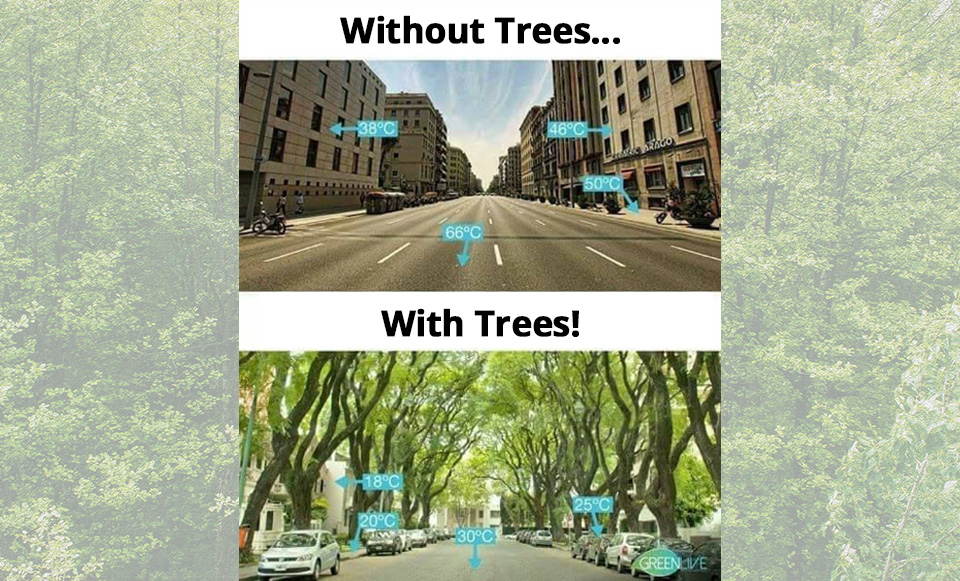
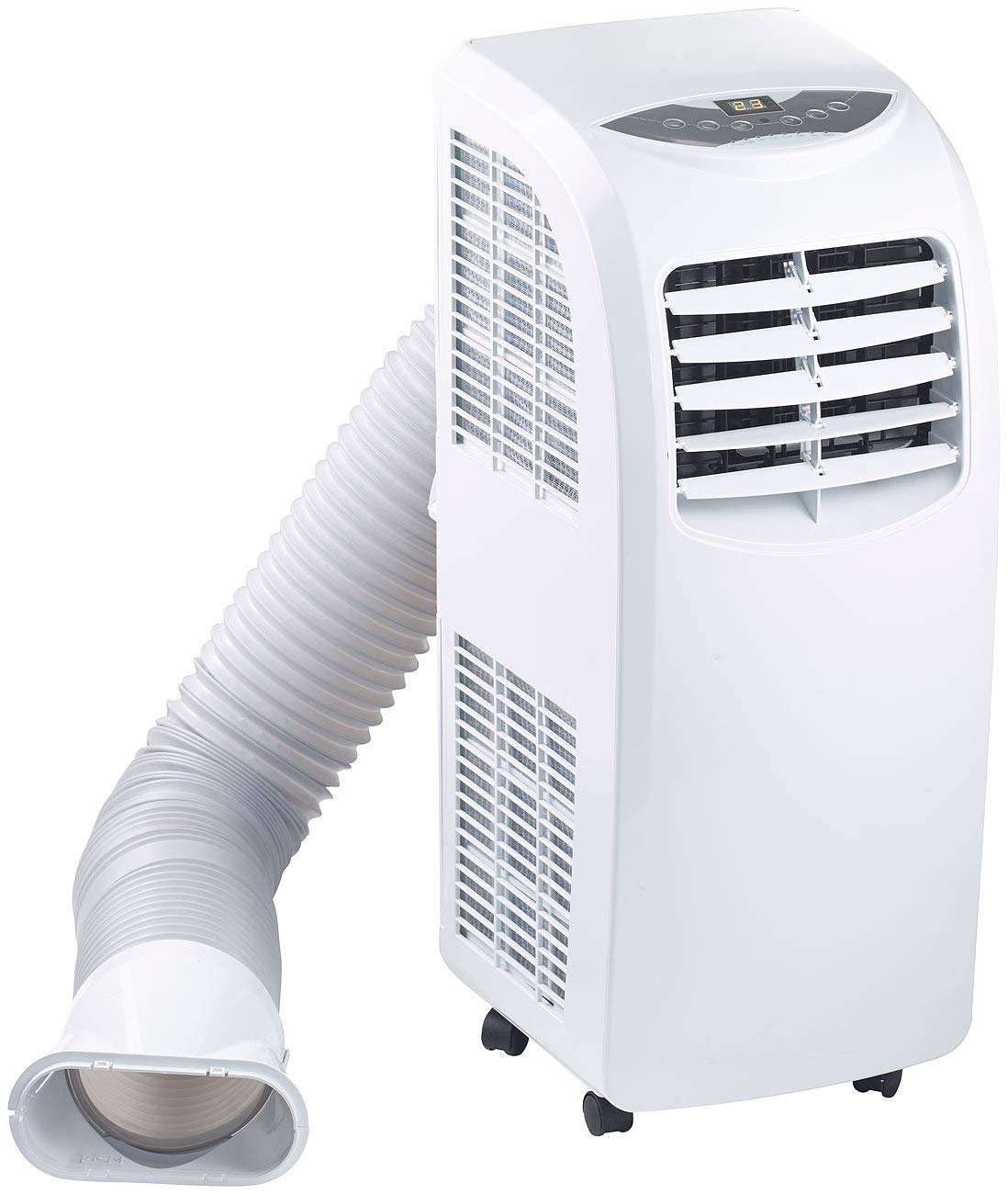
The bulk of urban heat island effect is driven by the radiative absorption of non-porous materials of the built-environment. Other heat waste put into the area accounts for less than something like 5% of the additional heat added when compared to rural areas.