Another embarrassing scam sponsorship. The first big one was in 2015, when Banc de Binary sponsored Liverpool FC.[1] Then, of course, there was FTX and the various teams that played at the "FTX Arena" in Miami. Now this.
"DigitalBits, the blockchain for brands." Like that was going to work.
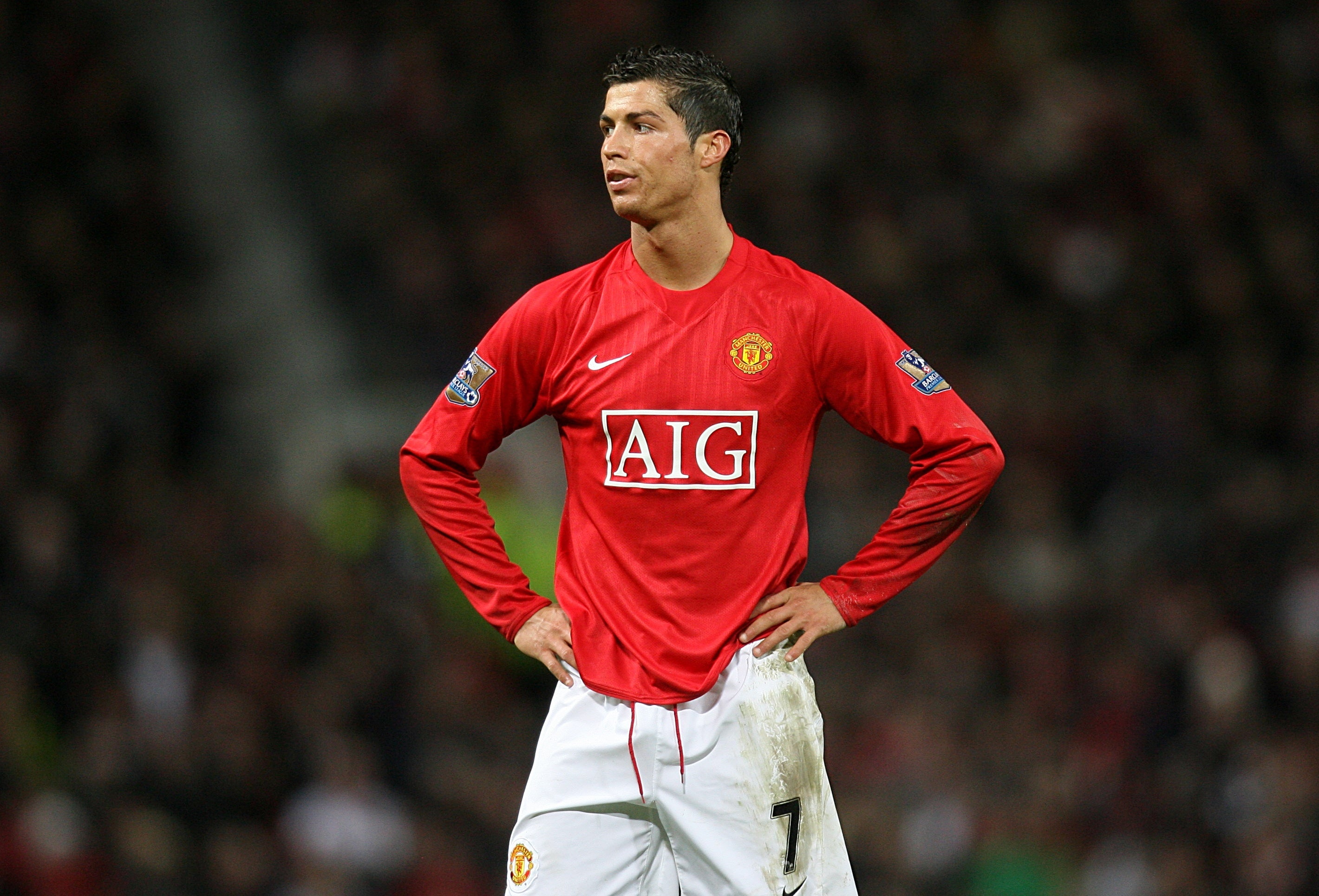
There was also the sponsorship relationship between AIG and Man United in the second part of the 2000s. It was surreal to see Cristiano Ronaldo wearing a AIG-branded football shirt [1] at the height of the Global Financial Crisis, which had just seen AIG almost go bust [2].
I hadn't thought about the rugby club in my hometown for years. I looked it up recently and some YouTuber had sponsored them [1] for stadium naming rights [2]. It's not a surprise how it ended.
With FTX, also don't forget that they sponsored the baseball World Series. Go back and look at any clip from the 2022 World Series and the umps are all wearing "FTX" emblazoned on their chest.
If you watch a sport like Formula 1, there’s an endless amount of scam sponsorships. When the money is sorely needed, the vetting for sponsors decreases
On a related note: I just started blocking youtube channels that have titles like: "Why you are doing $X wrong". There are so many interesting questionsnout there. And of those interesting questions a good fraction can be answered in really interesting ways.
Yet people tend to fall for stupid questions with obvious answers. As a film maker myself I dislike creators who treat their viewers with contempt or don't reflect on/care about their own impact on a media ecosystem as a whole.
For sports like F1 where there's a lot of $$$ that goes into running the sport itself, it's still understandable, but I always find it funny when you have cricket players (which is huge in India where I'm from) walk out with a dozen logos plastered on them [1], though the sport is much "cheaper" to conduct. But then again, finance bros be making money while the sun shines I guess, and I assume these companies getting their logos in front of a billion eyes is enough RoI for them.
A Nike shirt with a Nike logo on it isn't a problem.
I would never buy a jersey with a big digital blur logo on it unless they spent decades innovating in the fashion industry on top of their crypto junk.
In the case of sports uniforms, the visible logo grants a discount on the kit.
Our youth club got a pretty good discount from Nike to switch from Adidas, but it came with the stipulation that the socks need to have the swoosh on them too. You can buy soccer socks with the swoosh at any sporting goods shop for the same price as any other soccer socks, so it's not a big deal.
Our club is a 501c3 with open books, meetings, etc and the expectation that parents are involved, so I can confirm that absolutely no logo appears on anything unless it has some sort of benefit to the club. The sales reps that visit don't assume otherwise, so it's a pretty safe bet that this is standard practice everywhere.
Shirts - I typically don't buy any that has branding visible while wearing. If I have any, it was an oversight on my part.
It just occurred to me my jeans likely do. If I can find a clean way to remove them, I'll do it.
Car: Good point. I guess I won't as it will affect the resale value (and cost money to remove it properly). But when buying a car, if I get the option to get the same car without the name, badge, etc - I'd take that option.
Backpacks: Rarely use them, but you have a point. If I can cleanly remove them or buy quality ones in the future that don't have a logo, I'll do it. I suppose I could just put duct tape on the logo.
Note: I'm not against people intentionally keeping the logo if they want to promote the brand - this is not a moral crusade on my part. I just want the product at a cheaper price if I am going to provide them with free advertising.
I don't buy anything with a brand logo on it myself, and see it the same way; it's advertising space for something I already paid for.
I've honestly thought about the car thing too, after I saw a car without a make on it (I think it was a custom built thing for some super-rich guy). I was thinking about replacing the logo with something fun, but couldn't be bothered to figure out what it meant for the insurance (believe it or not, it can mean something).
Sure there are financial realities, but sometimes the sponsor and the logo fits the vibe of the team really nicely. Inter and Pirelli, Barca and Unicef, Arsenal and O2, Newcastle and... Newcastle.
Credit where credit's due, the NHL has some really great jerseys going on right now.
Similar effect, yes, but sports fans come off (to me) as more extreme. I've never seen someone hate another because they chose the wrong brand of phone, for instance, but I've absolutely seen people hate other people for choosing the wrong team.
Clubs' spending must be tied to their revenue, foregoing sponsorship money would force them to spend less no matter what, and there's a continuos arms race to spend more and more.
Also, practically all football club ownership is a loss-making activity.
Which is a folly. How can Stoke-on-Trent ever compete with London. Even if London market is fragmented in 6 or more clubs it's still much much bigger.
Fans of small teams are left hoping that some entrepreneur from their town wins big on the stock market and then decides to buy some love with the help of clever lawyers to circumvent the Financial Fair Play.
Hmm that's interesting. I didn't realize European leagues differed so greatly from U.S. leagues. U.S. leagues like the NBA and NHL are introducing jersey advertisements, but it's purely about earning more money. Most (all?) U.S. leagues have some type of salary cap to keep player compensation down.
US leagues have salary caps built into their player union bargaining agreements and built into the league structure itself. In Europe where you have many teams, many leagues, and a wide variety of ownership groups (from millionaires up to literal country sovereign wealth funds), they maintain some semblance of "fairness" through financial fair play rules. This basically means that the teams are only allowed to spend on players (roughly) the same amount of money that they bring in as revenue. The revenue can be through tickets, concessions (I think), sponsorship deals, shirts/kits, etc... So in a very real way, having a big-money shirt sponsor directly impacts the quality of the players that a team can sign.
In the US, spending caps are set and enforced in other ways.
Up until relatively recently Barcelona often played without a sponsor on their shirts, however, Financial Fair play rules mean club's spending limits are based on their revenues - so clubs are incentivised to increase their revenues as much as possible to ensure they can maximise their spending on player salaries and transfer fees.
The guy who owns Hoffenhiem tried to do that, and was slapped down. Red Bull sort of got away with it, but are widely despised throughout Germany and they struggle with attendance.
Then the Arabs that bought Manchester City tried to do that x100 and managed to get away with it.
It's all tied to how many billions the owner(s) can drop on lawyers. One guy with a billion? Nah. A consortium of oil shieks that can spend a billion on lawyers? Yes.
The club board specifically decided not to renew their decades old main shirt sponsorship deal with Pirelli (120+ year old tire manufacturer) in order to pursue the new riches of the crypto-companies.
Their city rivals did the same with BitMex and BitGet respectively, it seems like they are still getting paid or they decided to keep the sponsorship on the shirt regardless.
[The company has] 'undertaken a proactive process for the redefinition of partnerships' is an impressive new nadir of corporate bullshit. With a little more effort these PR geniuses will finally transcend the horizon of meaning and enter a dimension of pure brand awareness.
"I am writing you today to undertake a proactive process for the redefinition of tenancy that will involve not paying you in the future, in line with my objectives of economic sustainability and the use of your apartment."
Oh just leave out the part about not paying and refer obliquely to a 'necessary fiscal realignment.' Add in some terms about consent being considered irrevocably transmitted upon opening of the letter and you're gold.
I've never really understood how it works out to have fans buy jerseys for 100+ euros and then run around with them doing unpaid advertising for Emirates or bwin :-)



"DigitalBits, the blockchain for brands." Like that was going to work.
[1] https://www.youtube.com/watch?v=X3-hxQ1mPh4